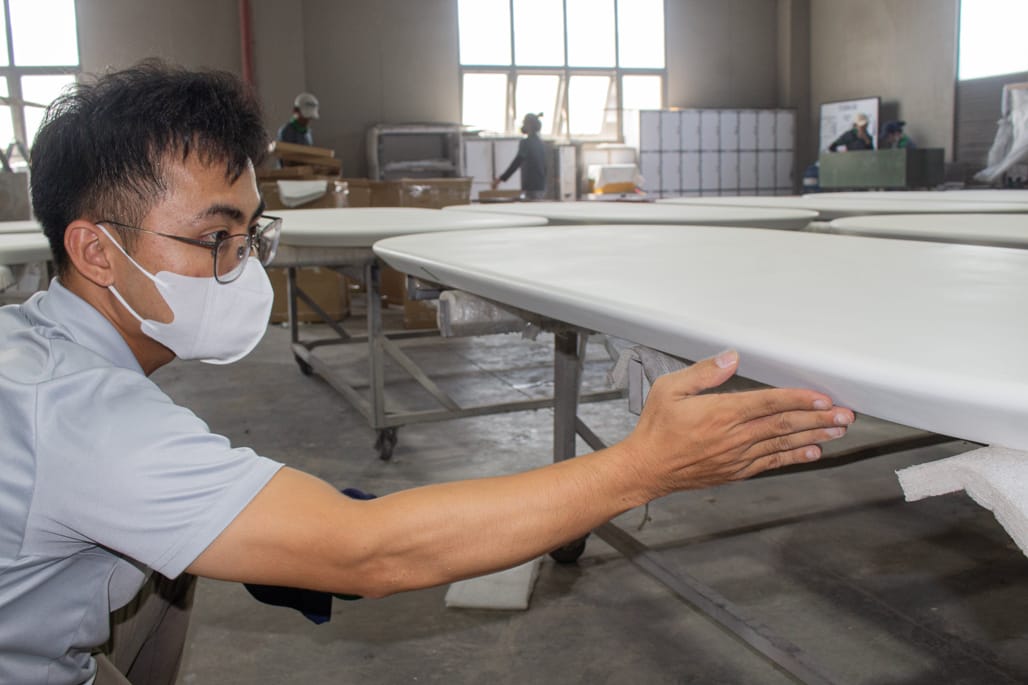

Private Label Furniture Manufacturer – Transforming Ideas into Signature Brands
What exactly is private label furniture? How does it differ from white label products? And where can your business find a reliable private label furniture manufacturer to partner with? In this article, Aurora Craft will walk you through the answers to these questions and share valuable insights that can help your brand build a unique and lasting presence in the global furniture market.
What Is Private Label Furniture?
Private label furniture refers to products manufactured by a third-party producer but sold under the brand name of another company. In simple terms, a private label furniture manufacturer manages the entire production process, while the purchasing business focuses on brand building, marketing, and customer engagement.
Although the company doesn’t operate the factory itself, it still plays a decisive role in shaping the final product — from design concepts and material selection to quality standards, packaging, and labeling that reflect its brand identity. This model allows businesses to retain creative control and market influence while relying on specialized manufacturers for production expertise.
It’s important to note that private label is a business model, not a manufacturing method. Depending on how the partnership is structured, private label furniture can be produced through OEM (Original Equipment Manufacturing), ODM (Original Design Manufacturing), or even White Label arrangements. In all cases, the final products are marketed exclusively under the buyer’s own brand.

Today, this model has become a strategic pathway for many global furniture retailers. West Elm serves as a prime example:
West Elm is a U.S. furniture and home décor retailer that follows a private label model, focusing on in-house design and brand identity while partnering with external manufacturers for production. The company collaborates with Fair Trade Certified™ factories and artisan workshops in countries such as Vietnam, India, and Indonesia, where many of its exclusive collections are crafted.
Through these OEM and ODM partnerships, West Elm maintains full control over product design and quality standards, while leveraging the craftsmanship and production capacity of specialized suppliers. This approach allows the brand to deliver modern, handcrafted furniture that aligns with its sustainable and design-driven positioning.
What Is the Difference Between White Label and Private Label Products?
How to Distinguish the Two
The difference between white label and private label lies primarily in the level of involvement a business has in shaping the final product:
- With a white label approach, companies typically purchase mass-produced goods from a factory, attach their own logo, and then sell the products in the market without making any modifications. This model provides speed and simplicity but offers very limited differentiation.
- In contrast, the private label model involves deeper collaboration. Here, the business works directly with a private label furniture manufacturer to co-develop new products. From initial design concepts to material selection and technical specifications, every detail can be tailored to align with the brand’s positioning and customer expectations.
In practice, the terms “white label” and “private label” are mainly used within B2B transactions to describe the partnership structure between factories and retailers. For end consumers, these distinctions are largely invisible. What matters most to them is the brand name they see on the product. This means that trust in quality, after-sales service, and the overall user experience is tied directly to the retailer’s brand, not to the original manufacturer behind the scenes.
An Illustrative Example
In our earlier article about a white label furniture manufacturer, Aurora Craft introduced a retail brand called “Susie”. At the initial stage, Susie imported white label coffee tables and chairs from Aurora Craft.
These tables and chairs were mass-produced, requiring no changes or customizations. Susie simply attached its logo and marketed the collection under the name “The Susie Bespoke.” -> This scenario represents a classic example of the white label furniture model
Now let’s continue the scenario. Imagine that The Susie Bespoke line became a commercial success. Riding this momentum, Susie decided to expand its product portfolio with the ambition of developing a new line of premium furniture exclusively only for its brand.
To achieve this, Susie continued its partnership with Aurora Craft, a custom furniture manufacturer based in Vietnam. Together, both sides discussed every aspect of the new product — from overall design and dimensions to stylistic details. Once both sides aligned on the concept, Aurora Craft created prototypes for review before moving into full-scale production.
The final product, branded as “Susie’s Premium Bespoke,” was launched exclusively under Susie’s name. Unlike the earlier white label collection, this table coffee set line was unique, designed in partnership, and unavailable under any other retailer’s brand. -> This marked a clear shift to the private label furniture model.

From these two examples, the distinction becomes evident. “The Susie Bespoke” illustrates the white label model: generic production with simple rebranding. Meanwhile, “Susie’s Premium Bespoke” showcases the private label model, where the retailer collaborates directly with the manufacturer to bring a customized, brand-exclusive product to life.
What makes this dynamic particularly interesting is that the same Vietnam-based factory, such as Aurora Craft mentioned in the example above, can effectively serve both roles. Depending on the retailer’s needs, it can act as a supplier of white label products or as a private label furniture manufacturer like our Aurora Craft factory, working closely with businesses to transform ideas into signature collections.
The Pros and Cons of Private Label Furniture – What Businesses Should Know
At Aurora Craft, we invite you to take a closer look at both the advantages and potential challenges that come with partnering with a private label furniture manufacturer. Understanding these factors will help your business make informed decisions and unlock the full potential of this model.
Key Advantages
It’s no coincidence that an increasing number of retailers – particularly in the furniture sector, are turning to private label development. This model offers a range of strategic benefits, including:
Full control over product quality
By collaborating directly with a private label furniture manufacturer, your business can make decisions on every critical element: from raw material sourcing and craftsmanship techniques to finishing standards and packaging design. This level of involvement ensures that every piece aligns perfectly with your brand’s promise of quality.
Pricing freedom and strategic flexibility
Unlike distributing established brands, you are no longer tied to pre-set price structures. Instead, your company enjoys the freedom to set pricing strategies based on profit goals, target customer segments, and long-term brand positioning.
Maximized profit margins
By cutting out intermediaries and leveraging the efficiencies of a dedicated factory, profit margins on each item are often significantly higher compared to selling third-party brands. This makes the private label model especially attractive for retailers aiming to scale profitably.
Agility in responding to market trends
Consumer preferences in furniture can shift quickly. With private label manufacturing, your business can work directly with the factory to adapt—whether that means adjusting designs, introducing new materials, or launching an entirely new collection. This agility provides a crucial competitive edge in a fast-evolving industry.
Building exclusive competitive advantages
Private label collections can evolve into signature lines—products that are found only within your distribution channels. This exclusivity not only elevates your brand’s distinctiveness but also strengthens customer trust and loyalty by creating a unique value proposition that competitors cannot replicate.
Challenges in Developing Private Label Products
While the bespoke furniture manufacturer model opens up many opportunities for businesses, it also brings along significant challenges – especially for startup furniture brands.
First, dependency on the manufacturing partner is one of the biggest hurdles. When the entire process is handled by a private label furniture manufacturer, both product quality and timelines are directly tied to their reliability. Even a minor issue at the factory can lead to order delays or compromised quality, ultimately affecting the brand’s reputation. This is why carefully vetting and partnering with a trusted manufacturer is a critical step that cannot be overlooked.

Second, building brand trust is not something that happens overnight. Unlike well-established giants with global reach, private label products often gain visibility only within niche distribution channels. This makes expanding the customer base a slower process, requiring a consistent marketing strategy and patience for the brand to gradually establish its market position.
Key Steps to Successfully Investing in the Private Label Model
To fully unlock the potential of working with a private label furniture manufacturer, businesses need a clear implementation roadmap. Below are five essential steps that can optimize the process of building a brand and bringing products to market:
Step 1: Research the market & choose the right niche
Every successful strategy begins with understanding the market. Businesses should analyze consumer behavior, track trends, and identify potential customer segments. Choosing the right niche not only makes the brand stand out but also creates a distinct competitive edge from the very first launch.
Step 2: Select a reliable manufacturing partner
Product quality is directly tied to brand reputation, and this depends heavily on the manufacturer. Partnering with an experienced and transparent private label furniture manufacturer ensures consistency in quality, timely delivery, and scalability. It is essential to build a checklist of criteria to evaluate and select the right partner.
Step 3: Design packaging & build brand positioning
Packaging is not just a protective layer for the product. It is also a powerful tool to communicate brand value. Elements such as logos, colors, materials, and messaging need to be consistent to establish a unique identity. Creative, practical, and well-targeted packaging helps products capture attention on store shelves and remain memorable in the minds of consumers. For this reason, brand positioning must never be overlooked.
Step 4: Launch & market the product
To enter the market quickly, businesses need a multi-channel communication strategy. Teaser campaigns, influencer marketing, digital advertising, traditional retail, and e-commerce platforms (such as Amazon, Shopee, and Lazada) must all be coordinated effectively. At the same time, optimizing SEO, product descriptions, and images increases visibility and boosts conversion rates.
Step 5: Gather feedback & continuously improve
Once the product is launched, collecting feedback and measuring customer satisfaction becomes crucial. Improvements in design, materials, or packaging not only enhance user experience but also strengthen trust in the brand. Companies that listen actively and commit to continuous improvement are more likely to maintain long-term competitive advantages.
Aurora Craft – Private Label Furniture Manufacturer in Vietnam – Trusted by Over 500 Global Clients
About Aurora Craft
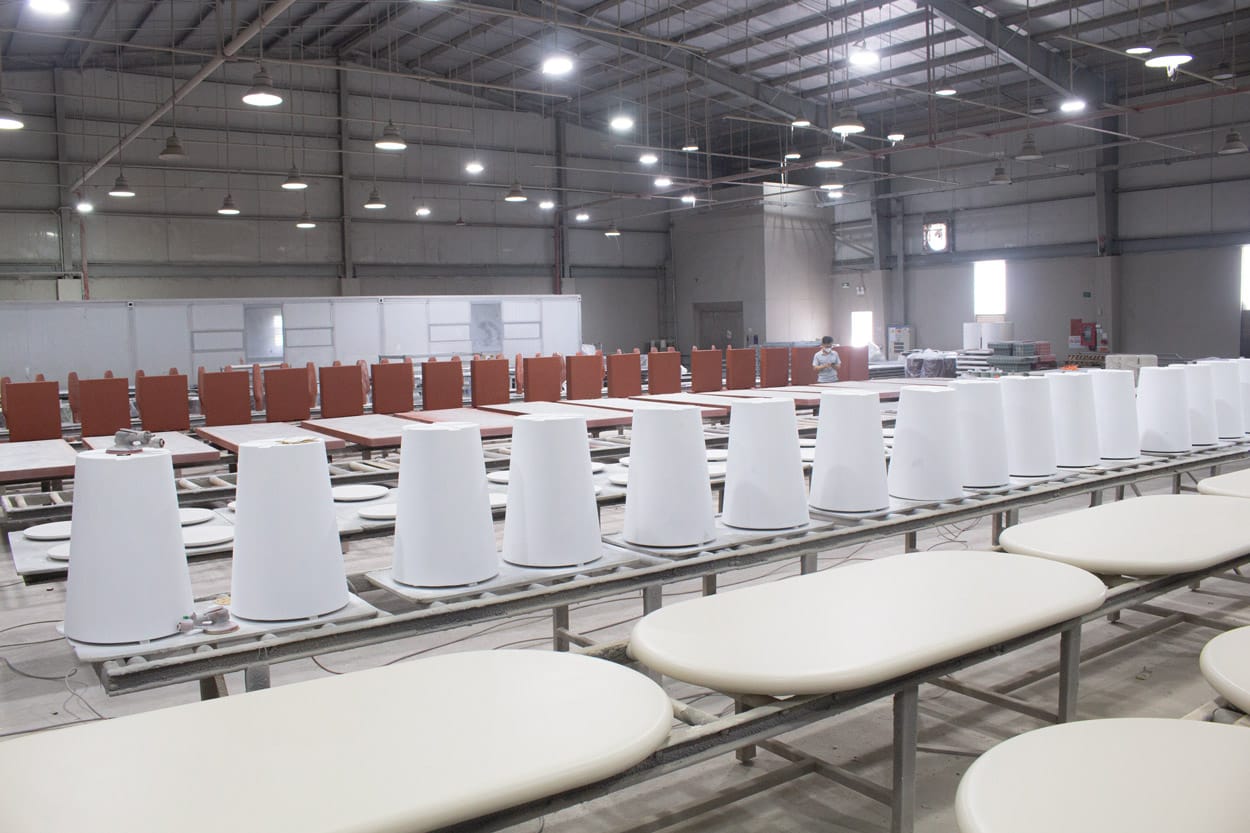
Aurora Craft is a Vietnam furniture manufacturer, with over 15 years of experience in the export furniture industry. The factory covers 10,000 m² and combines skilled engineers, experienced craftsmen, and advanced machinery. This allows Aurora Craft to handle both small and large export orders, with a production capacity of up to 60 containers per month.
With more than 500 successful projects worldwide, Aurora Craft has built a strong reputation among international partners from the USA, Australia, Germany, Spain, and Qatar. We provide professional OEM and ODM services, enabling clients to customize designs, optimize quality, and build exclusive brand identity.

Steps to Transform Your Ideas into Finished Products
Aurora Craft follows an 8-step process to develop private label furniture products for our clients:
Step 1: Catalog & Quotation
Upon receiving your inquiry, Aurora Craft provides a detailed catalog and quotation. We also invite you to visit our factory in person. This gives you the chance to review materials, observe the production process, and evaluate our export capabilities firsthand.
Step 2: Design Development
Once cooperation is confirmed, clients can provide product sketches or physical samples. For businesses with only an initial idea, our design team and technicians will help turn that concept into a complete design. Both sides finalize key factors such as style, color, material, quantity, and quality standards.
Step 3: Deposit
When the design and requirements are confirmed, clients place a deposit of at least 30% of the total order value. For prototype-only orders, 100% of the sample cost may be required to ensure timely progress.
Step 4: Sample Approval
Within 7–30 days, Aurora Craft creates a prototype and provides detailed photos and videos of each production step. Clients may request adjustments if needed. Once approved, the prototype becomes the official reference for mass production.
Step 5: Mass Production
After sample approval, we begin large-scale production. Completion typically takes 45–90 days, depending on order volume and product complexity.
Step 6: Quality Control
Aurora Craft has an experienced QC team supervising the entire process to ensure every item meets international standards. Upon request, we can also work with independent inspection agencies for added reliability.
Step 7: Packaging & Shipping
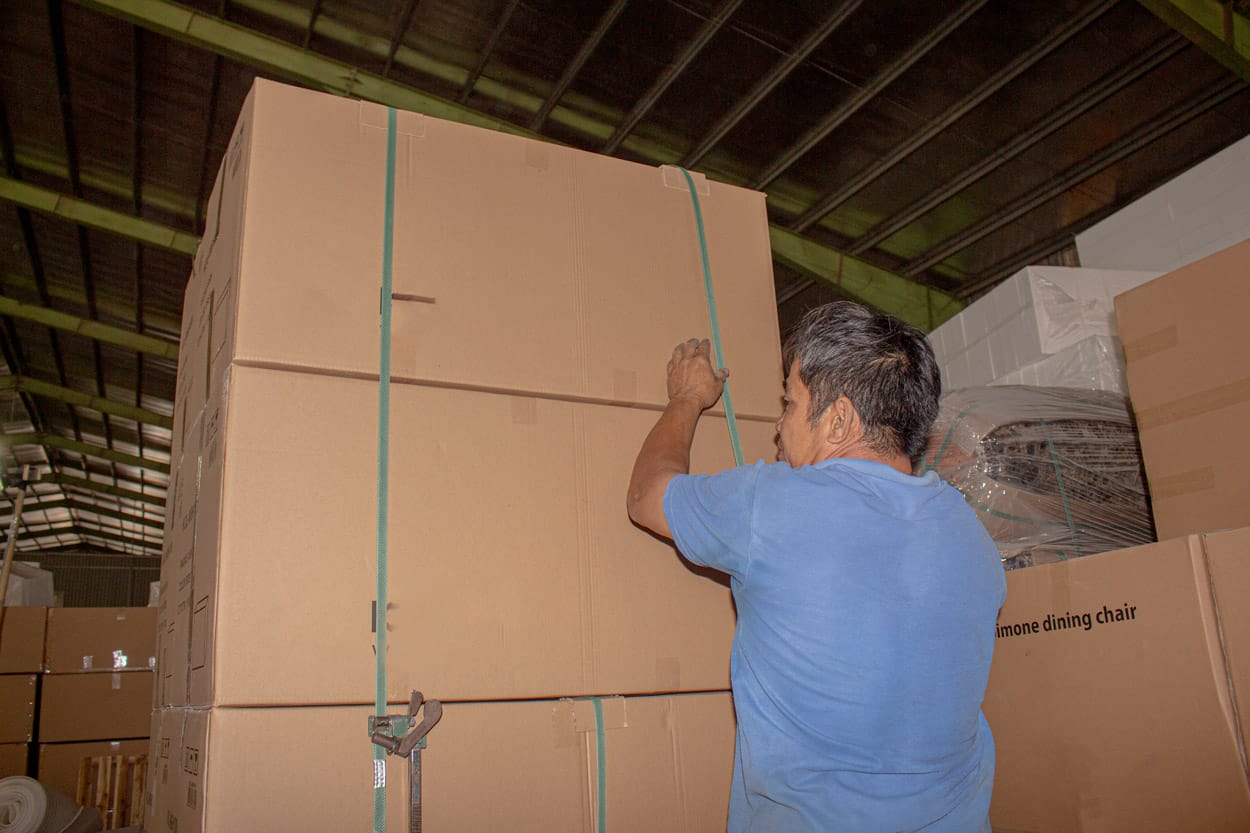
Products are securely packed and sealed before being loaded into containers. Aurora Craft’s logistics team manages the full shipping process, including documentation and customs procedures, in compliance with international trade terms.
Step 8: Final Payment
The remaining balance is settled after clients receive the shipping documents, or according to the agreed contract terms. Notably, sample and mold fees are deducted if the final order meets the agreed MOQ.
Commitment to Timely Delivery and After-Sales Service
Aurora Craft is committed to on-time production and professional after-sales support for our business partners. Every project is closely monitored from concept to final delivery, ensuring the highest level of product quality.
We invite you to connect with Aurora Craft – a trusted private label furniture manufacturer in Vietnam. Our team is ready to accompany your business, turning every idea into unique furniture products with global standards of quality.
-
 Furniture Export Logistics from Vietnam: A Complete Guide for International Buyers
 -
How Lead Time Impacts Furniture Manufacturing Cost
-
 MOQ in Furniture Manufacturing: Cost Drivers Buyers Often Miss
 -
5 Best Factory Tips to Lower Custom Furniture Costs
-
Definition of MDF Wood: Properties, Types, and Applications Explained
-
How Hotel Furniture Wholesale Can Save Costs for Large Projects