Furniture Export Logistics from Vietnam: A Complete Guide for International Buyers
Importing furniture from Vietnam involves much more than international shipping. From order planning and export compliance to documentation, protective packaging, container loading, freight costs, and final delivery, each stage requires careful coordination to minimize risks, control costs, and prevent delays. This comprehensive guide helps international buyers understand the key processes, requirements, and practical considerations of furniture export logistics from Vietnam, while drawing on Aurora Craft’s hands-on experience and 9-step workflow to demonstrate how these challenges are managed in real-world operations.
9-STEP FURNITURE EXPORT LOGISTICS PROCESS
These nine steps illustrate the overall furniture export journey. In practice, certain activities, such as confirming Incoterms, coordinating vessel bookings, and preparing documentation, may overlap rather than follow a strictly sequential order.
Step 1: Order Planning
Shipment Requirements & Destination Planning
At the beginning of the furniture export logistics process, Aurora Craft coordinates with clients to identify destination-specific requirements, shipping arrangements, and documentation needs. While we review relevant export documentation requirements, we also confirm any additional import-related documents with buyers, as certain requirements may depend on the destination market and the importer’s specific arrangements.
At this stage, we identify the destination country, expected shipping arrangements, product characteristics, and anticipated shipment schedule. These factors help us anticipate export-related requirements, assess any special handling needs, and align our order preparation with the intended shipping plan.
By understanding these requirements early, Aurora Craft can coordinate more effectively with clients and their appointed logistics partners, helping ensure that furniture shipments are properly prepared for the next stages of the export process.
Order Quantity, MOQ & Shipment Volume Planning
In furniture export logistics, order quantity and packed shipment volume directly influence container utilization and transportation efficiency. At Aurora Craft, we consider not only the number of products ordered but also their packaging configurations and estimated shipping volume to help buyers plan logistics costs more effectively.
- Order Quantity & Shipping Volume: At Aurora Craft, we estimate the number of cartons, packing dimensions, and total shipment volume in CBM (cubic meters) based on the proposed order quantity. CBM is calculated using the length × width × height of each packed carton in meters. These estimates help us advise clients on suitable container arrangements, including FCL (Full Container Load) or LCL (Less than Container Load), while supporting more efficient container utilization and shipment cost planning in coordination with their logistics partners.
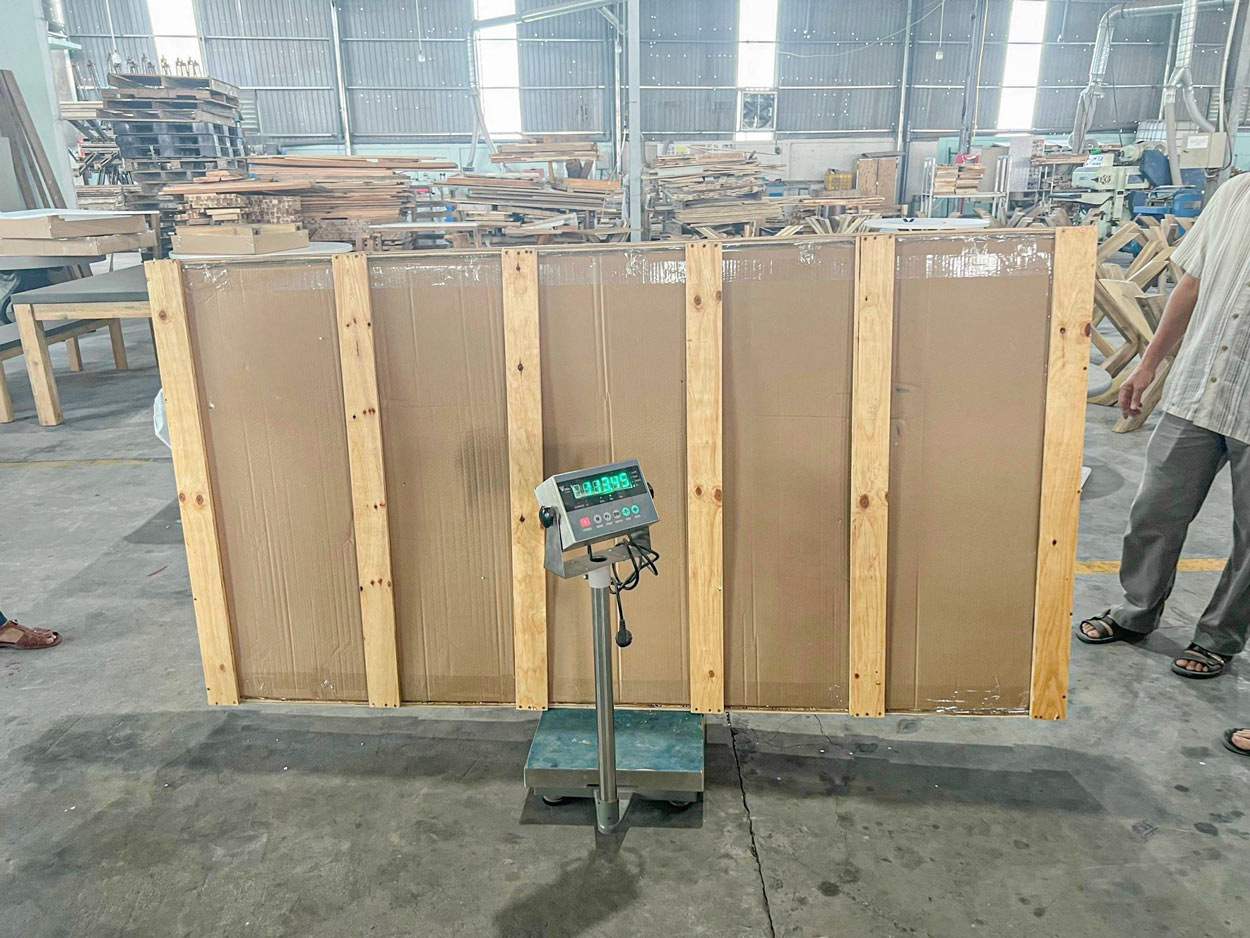
- MOQ (Minimum Order Quantity) Confirmation: MOQ refers to the minimum quantity required for production, which is different from the quantity needed to fill a shipping container. At Aurora Craft, MOQ varies depending on the furniture category, materials, specifications, and production requirements. We confirm the applicable MOQ with each client while considering opportunities to combine multiple SKUs within a shipment, helping buyers balance production requirements with shipping efficiency.
By reviewing order quantities and estimated shipment volumes early, we help clients make more informed purchasing decisions and prepare furniture orders that are better aligned with their export shipping arrangements.
Checking Export Market Standards
Export market requirements vary by destination country, furniture materials, and product category. For example, the United States regulates formaldehyde emissions from certain composite wood products and finished goods containing these materials under TSCA Title VI, alongside applicable California CARB requirements. In the European Union, timber legality and deforestation-related compliance are governed by the EU Timber Regulation (EUTR) and the transition to the EU Deforestation Regulation (EUDR), depending on the applicable implementation dates and product scope.
At Aurora Craft, we review relevant export-side requirements during order planning and coordinate with buyers on destination-specific compliance needs. Identifying these requirements early helps reduce the risk of documentation issues, customs delays, and unexpected complications during furniture export preparation.
Finalizing SKU Mix & Export Timeline
Once the order quantity and export market requirements are confirmed, we review the final SKU mix and establish a realistic timeline for shipment preparation. Both factors play an important role in ensuring that furniture orders are ready for export as planned.
- SKU Mix & Shipment Configuration: Orders containing multiple SKUs often involve different carton dimensions, weights, and handling requirements, which can affect container space utilization. At Aurora Craft, we review the SKU mix and packing specifications to identify potential loading constraints early. While combining different furniture products may create challenges, compatible carton sizes and configurations can also help improve space efficiency. This allows us to better prepare the shipment and coordinate loading requirements with our clients and their logistics partners.
- Production Lead Time vs. Total Delivery Lead Time: These two timelines are often confused but represent different stages of a furniture export order. Production lead time refers to the time required to manufacture and complete the products, while the cargo-ready date indicates when the finished goods are packed and ready for shipment. Total delivery lead time extends beyond production, including export handling, vessel scheduling, ocean transit, import customs clearance, and final delivery. At Aurora Craft, our sales team coordinates cargo-ready dates and shipment timelines with clients, while our documentation team monitors relevant shipping deadlines and coordinates export documentation requirements with logistics partners.
Understanding these distinctions helps international buyers plan inventory, coordinate shipping arrangements, and establish more realistic delivery expectations.
Another important consideration in export planning is the agreed Incoterms, which define how transportation responsibilities, costs, and risks are allocated between the seller and buyer. For example, under FOB terms, buyers typically arrange international shipping through their appointed freight forwarders, while Aurora Craft coordinates export-side preparation and fulfills its agreed delivery obligations. Understanding these responsibilities early helps both parties align their export plans. We will explore Incoterms and logistics booking in greater detail in Step 3.
Step 2: Final Product Quality Control & Export Readiness
Final Product Inspection
Final product inspection is an important quality control checkpoint in furniture export logistics. At Aurora Craft, we inspect finished furniture against approved samples and order requirements before the products proceed to export packing. Key inspection criteria include:
- Product Specifications: Verifying dimensions, materials, construction, and finishes against approved requirements.
- Appearance & Functionality: Checking surface quality, color consistency, structural integrity, and functional performance.
- Order Completeness: Confirming product quantities, SKU variations, components, and accessories against the order specifications.
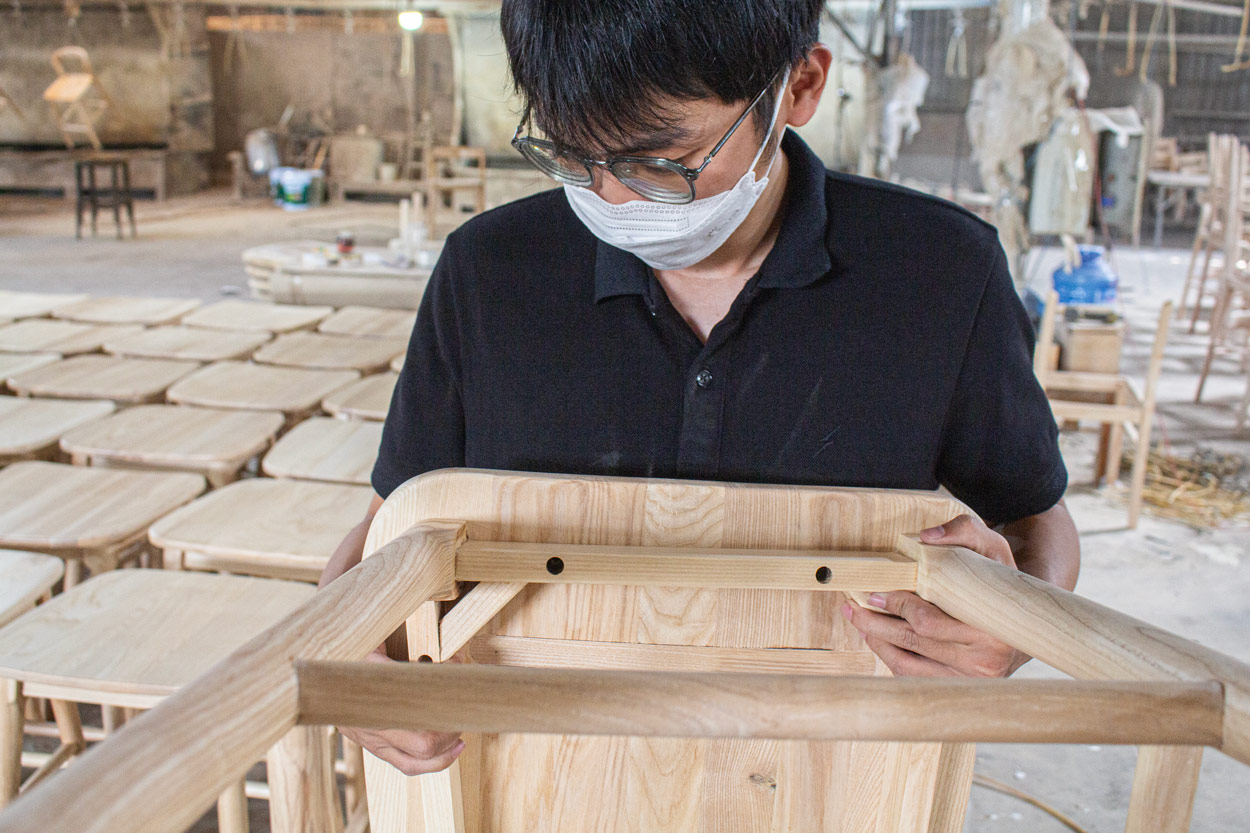
Any identified defects or discrepancies are reviewed and addressed before the affected products are approved for shipment preparation.
Inspection Approval & Export Readiness
Once the final product inspection is completed, the results are reviewed to confirm whether the goods meet the agreed quality requirements. Depending on the buyer’s requirements, an independent third-party inspection may also be arranged to verify product quality and order conformity before shipment.
At this stage, we focus on resolving outstanding quality issues, confirming the approved quantities, and coordinating the release of finished goods for export packing. Where independent inspection is required, its timing and approval conditions are agreed upon with the buyer.
This quality control checkpoint helps ensure that only approved furniture proceeds to the next stages of export preparation, reducing the risk of quality-related delays and disputes during international shipment.
Once the approved shipment quantities are confirmed, the relevant teams coordinate to ensure that export documents reflect the final shipment details. If quantities change during shipment preparation, the affected documents are reviewed and updated according to the stage of the export process.
Step 3: Confirming Incoterms & Booking Logistics Partners
Confirming Incoterms
Incoterms play a fundamental role in furniture export logistics because they define how transportation responsibilities, costs, and risks are allocated between the seller and buyer. At Aurora Craft, we confirm the appropriate shipping terms with our clients to clarify each party’s obligations before export arrangements begin.
- FOB (Free On Board): FOB is the most commonly used Incoterm for Aurora Craft’s international furniture export orders. Under FOB terms, we handle export customs clearance and arrange delivery of the goods on board the buyer’s nominated vessel at the agreed port of shipment. The buyer is responsible for ocean freight, import clearance, and arranging cargo insurance if needed. Risk transfers to the buyer once the goods are on board.
- CIF (Cost, Insurance and Freight): Although CIF is less commonly used for our export orders, Aurora Craft can arrange ocean freight and the required cargo insurance through our logistics partners when CIF terms are agreed upon. Under CIF, the buyer is generally responsible for import customs clearance and subsequent delivery arrangements, while the risk of loss or damage transfers when the goods are loaded on board the vessel at the port of shipment.
- DDP (Delivered Duty Paid): Under DDP terms, the seller is responsible for transportation to the agreed destination, import customs clearance, and applicable duties and taxes. Risk remains with the seller until delivery at the named destination, ready for unloading. As import regulations vary between countries, Aurora Craft has also handled shipments under DDP arrangements, which involve coordinating transportation, import clearance, and delivery to the agreed destination. As DDP involves additional responsibilities in the importing country, the feasibility and scope of these arrangements are evaluated individually based on the destination market and shipment requirements.
Booking Logistics Partners
Once the Incoterms are confirmed, the next step is coordinating bookings with shipping lines or freight forwarders. Booking arrangements are typically based on several key factors, including estimated shipment volume, container type and quantity, port of loading, port of discharge, and the target vessel departure date.
Under FOB terms, the buyer typically nominates a freight forwarder and arranges the vessel booking. At Aurora Craft, we confirm the cargo-ready date, coordinate export customs procedures, and prepare the required exporter-side documentation. Our documentation team works with the buyer’s appointed forwarder to align shipment preparation with the confirmed booking and applicable deadlines.
Under CIF terms, Aurora Craft directly coordinates with shipping lines or logistics partners to arrange bookings and synchronize shipping schedules with production timelines and committed delivery dates.
The booking confirmation and related shipping instructions establish important operational milestones, including empty container availability, Shipping Instructions (SI) submission deadlines, Verified Gross Mass (VGM) deadlines, container yard (CY) cut-offs, and the estimated vessel departure date (ETD). Aurora Craft’s documentation team monitors these requirements and coordinates with the relevant logistics partners when schedule changes occur. This helps our sales, warehouse, and documentation teams adjust shipment preparation and keep clients informed of potential scheduling impacts.
Once the booking and shipping schedule are finalized, the process moves into the next stage: preparing the required furniture export documentation for customs clearance and Bill of Lading issuance.
Step 4: Preparing Export Documents & Shipping Paperwork
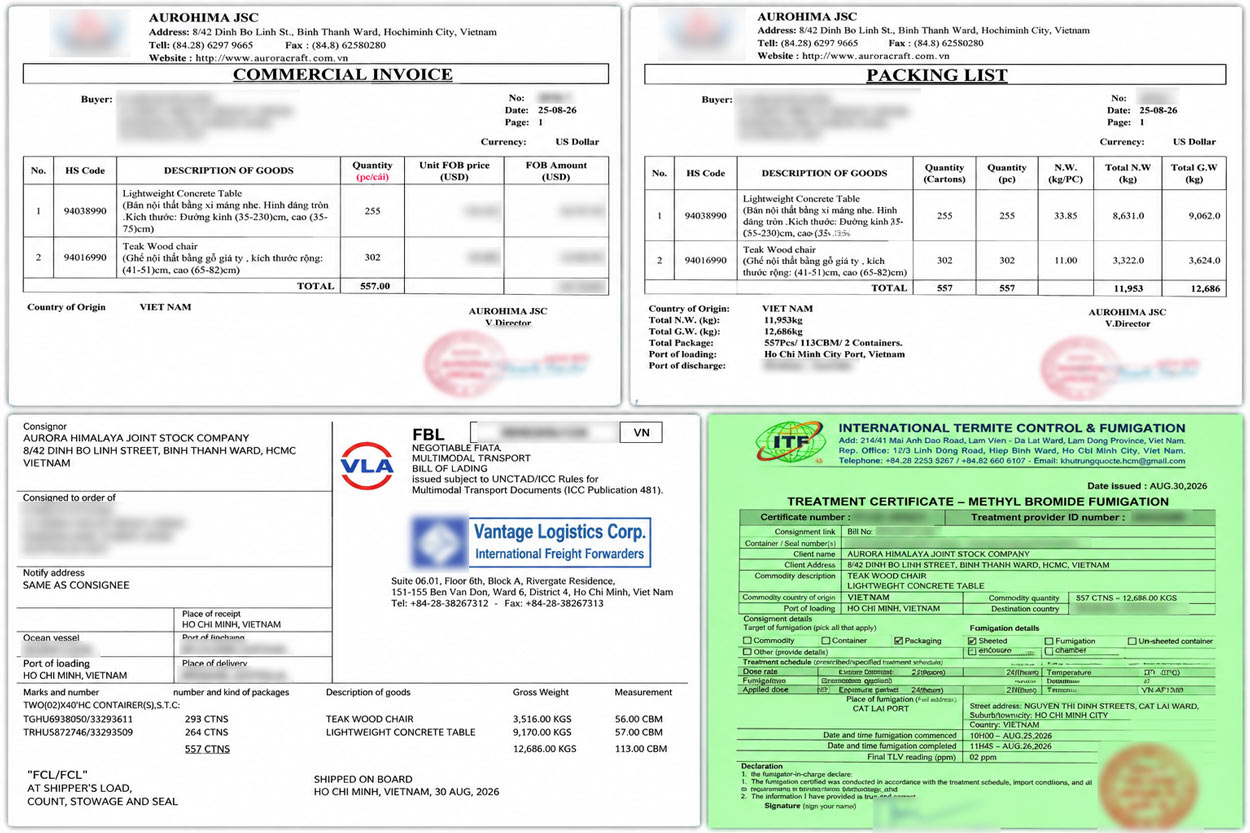
Accurate documentation is essential to furniture export logistics, but requirements vary depending on the destination market, furniture materials, agreed Incoterms, and applicable import regulations. Not every furniture shipment requires the same set of documents. At Aurora Craft, we review these requirements with our clients and their logistics partners to prepare the necessary export paperwork and coordinate shipment-specific documentation. Below are the common categories of documents involved in furniture exports from Vietnam, although their applicability may differ from one shipment to another.
Commercial Documents
Commercial documents provide essential information about the transaction, product details, and shipment contents. They support trade verification and customs procedures, although the documents required may vary depending on the shipment and applicable regulations.
- Commercial Invoice: Specifies product value, delivery terms, and payment information.
- Packing List: Provides detailed information about product descriptions, quantities by SKU, the number and type of packages, carton dimensions, net and gross weights, total shipment volume (CBM), and relevant packing details or shipping marks. This information supports customs verification, cargo identification, and logistics handling.
- Sales Contract: Confirms the agreement between Aurora Craft and the international buyer regarding pricing, specifications, lead time, and commercial terms.
At Aurora Craft, our sales team prepares the main commercial documents, including the Commercial Invoice, Packing List, and Sales Contract. These documents are coordinated with our documentation team during shipment preparation to ensure that the relevant shipping information is consistent with the export arrangements.
Transport Documents
Transport documents provide essential information about international cargo movements and support the transportation and release of goods. The specific documents used depend on the shipping arrangements and requirements of each shipment.
Bill of Lading (B/L): A key transport document issued by a carrier or its authorized agent that acknowledges receipt of goods for transportation and records essential shipment details. At Aurora Craft, our documentation team reviews draft B/L information, including shipper and consignee details, container numbers, and relevant cargo information, before confirmation. Telex Release is commonly used for our shipments when agreed payment and documentation requirements are met, allowing cargo release without presenting the original paper B/L at the destination, subject to the carrier’s applicable procedures.
Compliance Documents
Depending on the destination market, furniture materials, buyer requirements, and applicable regulations, additional certificates or permits may be required for certain shipments. The following documents serve different purposes and are not universally required for all furniture exports.
- Certificate of Origin (C/O): Certifies the country of origin of exported goods. Depending on the applicable trade agreement and rules of origin, a preferential C/O may support reduced import duties, while a non-preferential C/O may be used for origin verification or other trade requirements. Aurora Craft has experience preparing C/O documentation for shipments to markets such as Australia, New Zealand, Japan, the European Union, Canada, the United States, and the UAE. The applicable C/O type and supporting documents are determined according to the destination market, origin requirements, and specific shipment conditions.
- FSC Certification: A voluntary certification system supporting responsible forest management and traceability of forest-based materials. Buyers may request FSC-related documentation for eligible furniture products. Any FSC-certified product claim must be supported by the appropriate certification and Chain of Custody requirements.
- CITES Permit: May be required when furniture contains timber species regulated under CITES, depending on the species, product type, and applicable international trade requirements.
- Fumigation Certificate: Confirms that fumigation treatment has been carried out when required for specific products or packaging materials, subject to the applicable import and phytosanitary regulations.
- Phytosanitary Certificate: Certifies compliance with applicable plant health requirements when required for certain plant-based products or regulated materials in the destination market.
For furniture made from wood, bamboo, or other plant-based materials, additional documentation may be relevant depending on the product, material species, destination regulations, and buyer requirements. Aurora Craft has experience handling FSC-related documentation, CITES documentation, and fumigation certificates where applicable. These requirements are reviewed on a shipment-by-shipment basis rather than applied uniformly to all furniture exports.
Export Customs Declaration & HS Classification
Customs compliance is a critical part of furniture export logistics, involving accurate HS classification, electronic customs declarations, and adherence to applicable export regulations.
- Electronic Customs Declaration (VNACCS in Vietnam): At Aurora Craft, we handle export customs declarations directly through Vietnam’s electronic customs declaration system. Our documentation team reviews the relevant shipment information and coordinates the customs declaration process. Depending on customs risk assessment, shipments may be assigned to green, yellow, or red channels. When additional document verification or physical cargo inspection is required, we coordinate with customs authorities and relevant parties to support the clearance process.
- HS Code Classification: Accurate classification under the Harmonized System (HS) is essential for customs declarations, determining applicable duties, and identifying relevant trade requirements. Furniture HS codes must be determined based on each product’s characteristics, materials, construction, and intended function, in accordance with applicable classification rules and tariff schedules. At Aurora Craft, HS classifications are reviewed with reference to applicable Vietnamese customs regulations and import-export tariff schedules to support accurate export declarations.
Step 5: Furniture Packing & Protection
Proper packaging plays a critical role in furniture export logistics, not only by protecting products from damage but also by influencing handling efficiency, shipment volume, and container space utilization. Furniture shipments often involve bulky dimensions, fragile components, and moisture-sensitive materials, requiring packaging solutions that balance protection with logistics efficiency. Well-planned packing can also help reduce damage risks and provide useful supporting information when shipment-related claims arise.
At Aurora Craft, we select appropriate packing methods based on each product’s dimensions, structure, materials, and fragility. Large or unusually shaped furniture may require reinforced packaging, while fragile components such as glass panels and stone tops need additional cushioning and edge protection. Moisture-sensitive materials require suitable protective measures, and knock-down (KD) furniture may allow more compact carton configurations compared with fully assembled products, depending on the design.
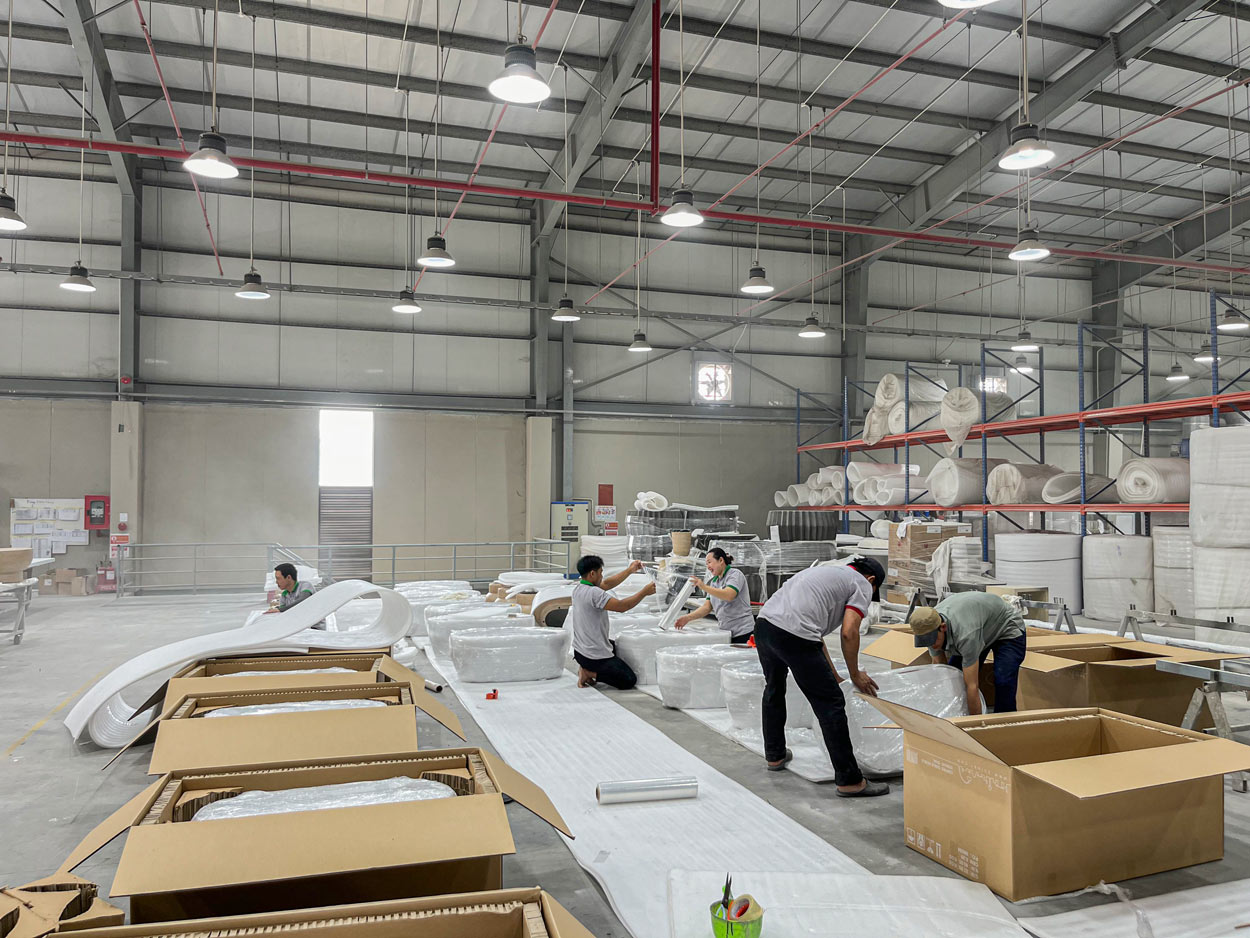
The following protective materials and packing solutions may be used according to the requirements of each furniture shipment:
| Packing Method | Purpose & Logistics Benefits |
|---|---|
| PE Foam & Protective Cushioning Wrap | Helps protect furniture surfaces from scratches, friction, and minor impacts during handling and transportation. |
| Corner & Edge Protectors | Protect vulnerable furniture corners and edges from impact and pressure, helping reduce damage during stacking, handling, and transportation. |
| Bubble Wrap | Provides additional cushioning for delicate furniture components and finished surfaces, helping absorb minor shocks and prevent scratches during transit. |
| Honeycomb Cardboard | Provides cushioning and structural support to help protect furniture surfaces and minimize movement within packaging. |
| Export Cartons | Provide protective outer packaging for furniture products, supporting safer stacking, handling, and transportation when appropriately specified. |
| Wooden Pallets | Support the handling and movement of heavy or oversized furniture. When solid wood packaging is subject to applicable international phytosanitary requirements, Aurora Craft coordinates the required treatment and ISPM 15 marking to support compliance with destination-market regulations. |
| Moisture Absorbers & Silica Gel | May be used when additional moisture protection is needed to help reduce humidity-related damage during long-distance ocean transportation. |
By considering both product protection and packed dimensions, we aim to prepare furniture shipments for safer handling and more efficient transportation. Packing specifications and shipment condition records, where available, can also support the assessment of potential shipping damage claims.
Step 6: Furniture Container Loading
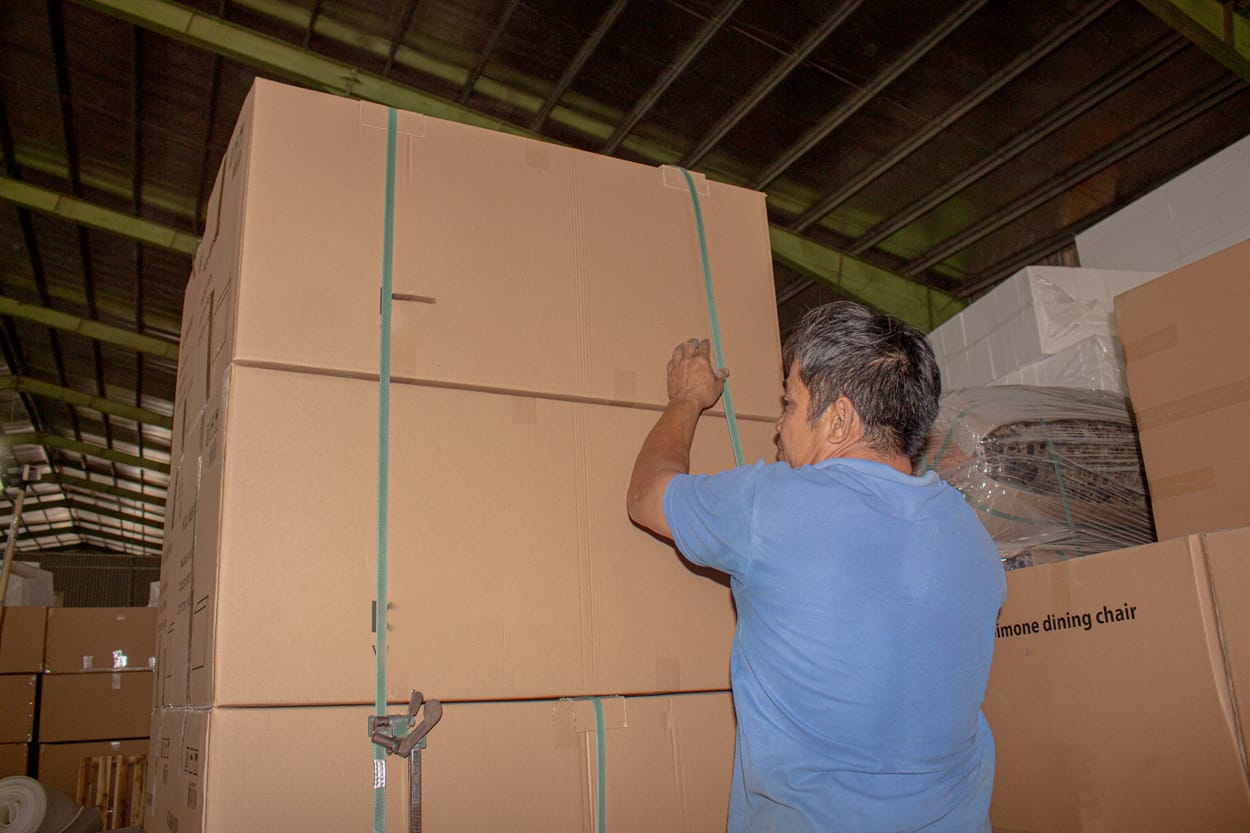
Container loading is a critical operational stage in furniture export logistics, where cargo protection, weight distribution, and loading efficiency must be carefully considered. At Aurora Craft, container loading is carried out at our factory, with coordination among the trucking provider, warehouse team, and documentation team. Before loading, the empty container is inspected for cleanliness, structural condition, floor integrity, and potential moisture or water leakage. The teams also coordinate container and seal information to support accurate shipment documentation.
Once the container passes inspection, we develop a loading plan based on key shipment information, including packed dimensions, gross weight, total shipment volume (CBM), SKU mix, stacking limitations, and product fragility. Container capacity and weight limits are also considered to determine the most suitable loading sequence and placement of different product groups. This approach helps minimize unused space, improve container utilization, and maintain balanced weight distribution.
During loading, furniture packages are arranged according to the planned sequence and designated positions for each SKU or product group. Heavy and bulky items are positioned to support stability and distribute weight safely, while fragile products, particularly those containing glass or stone components, receive additional protection against impact and excessive pressure. Appropriate blocking, bracing, and securing methods are applied throughout the loading process, followed by final reinforcement to minimize cargo movement during transportation. Where necessary, container-level desiccants are also used to help reduce moisture and condensation risks during ocean transit.
After loading is completed, Aurora Craft’s QC team conducts a final inspection of cargo stability, securing arrangements, pallet conditions (where applicable), and shipping marks. The container is then closed and sealed, with seal information recorded for subsequent transportation and shipment coordination.
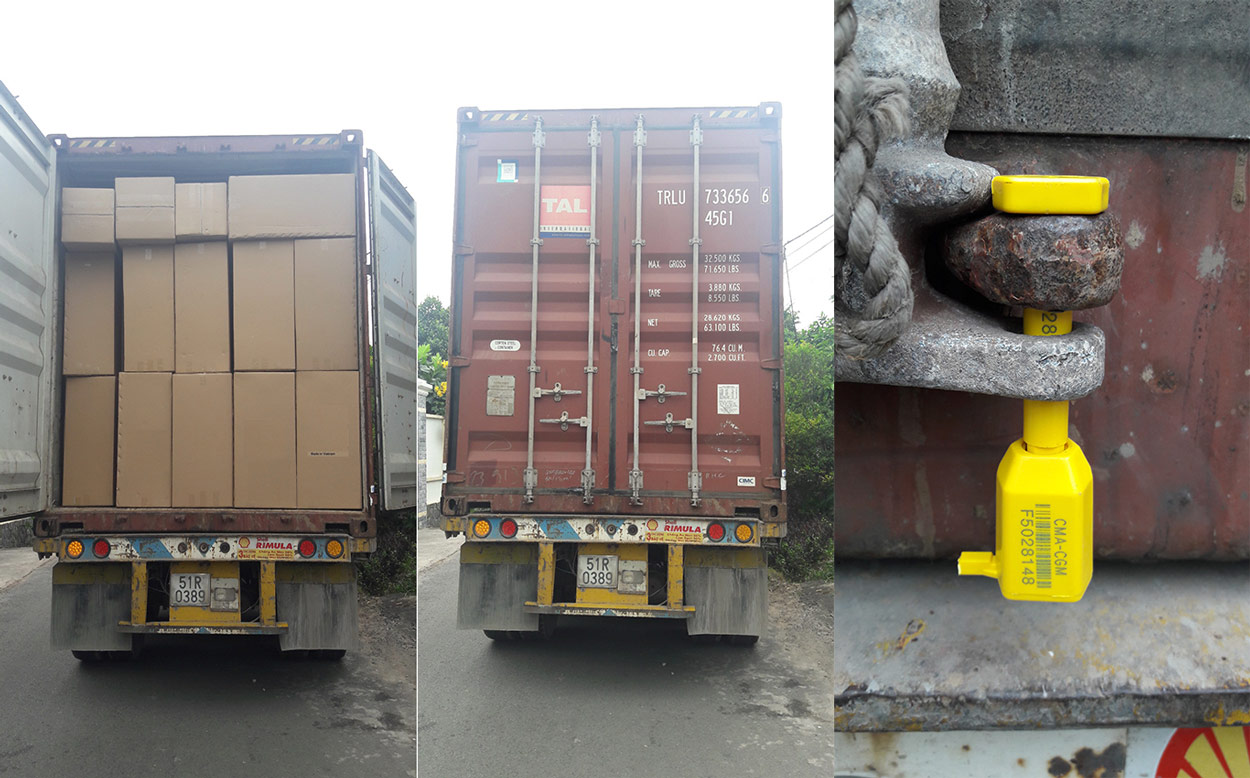
Before vessel loading, the Verified Gross Mass (VGM) of the packed container must be established, including the cargo, packaging, securing materials, and the container’s tare weight. At Aurora Craft, our documentation team coordinates the necessary VGM information with the responsible parties and appointed logistics partners to meet the shipping line’s submission deadline. Accurate and timely VGM submission helps support compliance with vessel loading requirements and reduce the risk of avoidable shipment delays.
Step 7: Inland Transportation (Pre-Carriage)
In furniture export logistics, inland transportation connects factory container loading with delivery to the designated export port, such as Cat Lai or Cai Mep Port in Vietnam. Once the furniture container has been loaded, secured, and sealed, it is ready for dispatch according to the confirmed shipping arrangements. Our documentation team monitors container gate-in status and relevant port cut-off deadlines to help ensure that shipments arrive at the designated terminal in time for the scheduled vessel departure.
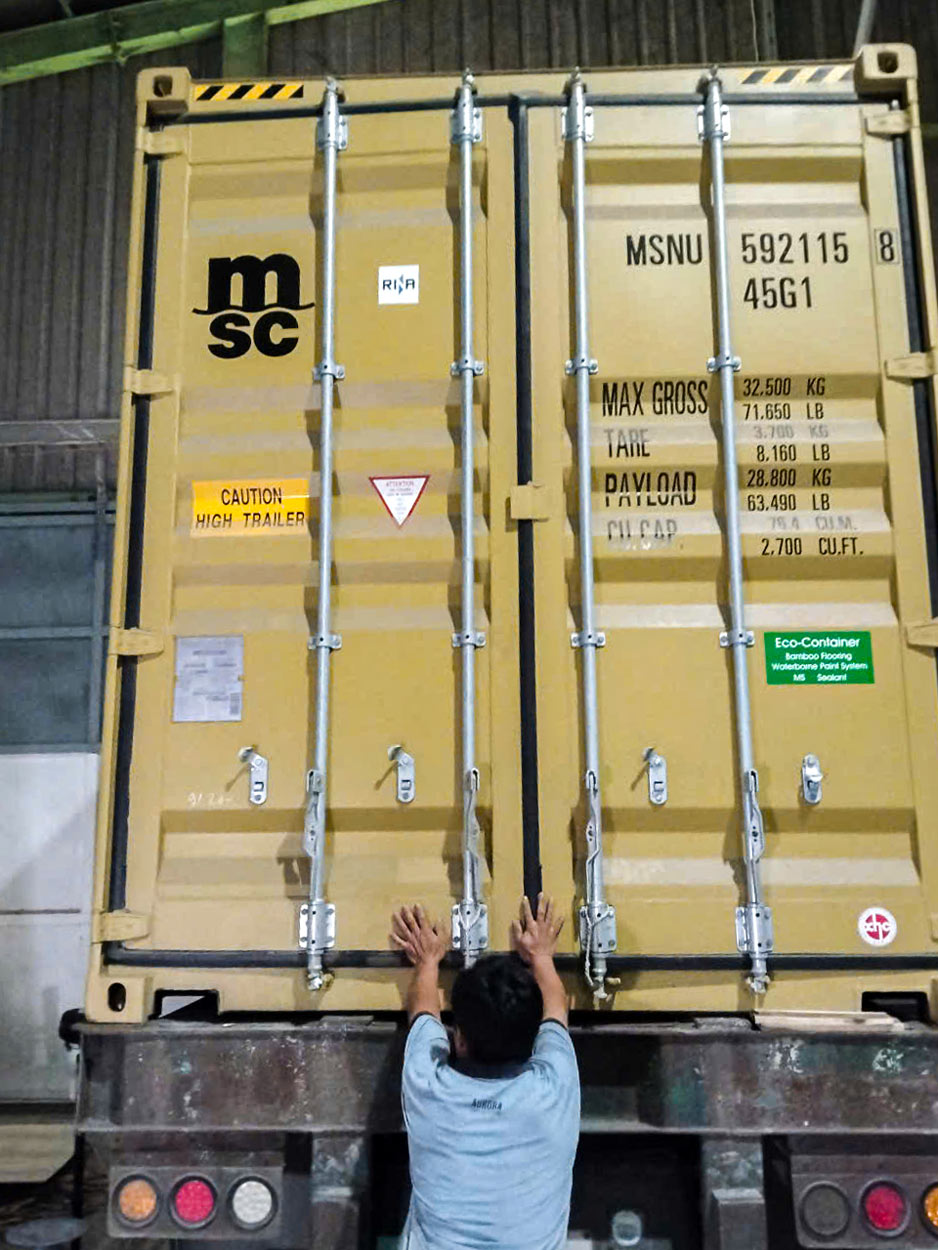
Pre-carriage scheduling is planned around the confirmed vessel departure and container gate-in deadlines established in Step 3. Our documentation team coordinates container dispatch and monitors port acceptance timelines, allowing for inland transit time and potential delays caused by traffic or port congestion. If a shipment is at risk of missing its cut-off, Aurora Craft works with the buyer’s appointed forwarder under FOB terms, or our contracted logistics partner under CIF terms, to review available sailing alternatives and potential additional charges. Relevant schedule changes are then communicated to clients to support timely adjustments to their delivery plans.
Upon arrival at the designated port or container terminal, the container undergoes gate-in procedures and is handed over for terminal handling and subsequent vessel loading. Aurora Craft coordinates with the relevant logistics partners to confirm container acceptance and verify shipping seal information as appropriate. Completing this stage on schedule helps keep the shipment aligned with its planned ocean departure.
Step 8: International Transportation (Main Carriage)
International ocean transportation is a major stage of furniture export logistics, beginning once the loaded container is placed on board the vessel at the port of origin. Responsibilities during this stage depend on the agreed Incoterms. Under FOB terms, the buyer or their appointed freight forwarder manages ocean freight arrangements and shipment tracking. Under CIF terms, Aurora Craft arranges ocean transportation and the required cargo insurance through our logistics partners, coordinating shipment updates until the cargo reaches the agreed destination port. Under both terms, the risk of loss or damage transfers to the buyer once the goods are loaded on board the vessel at the port of shipment.
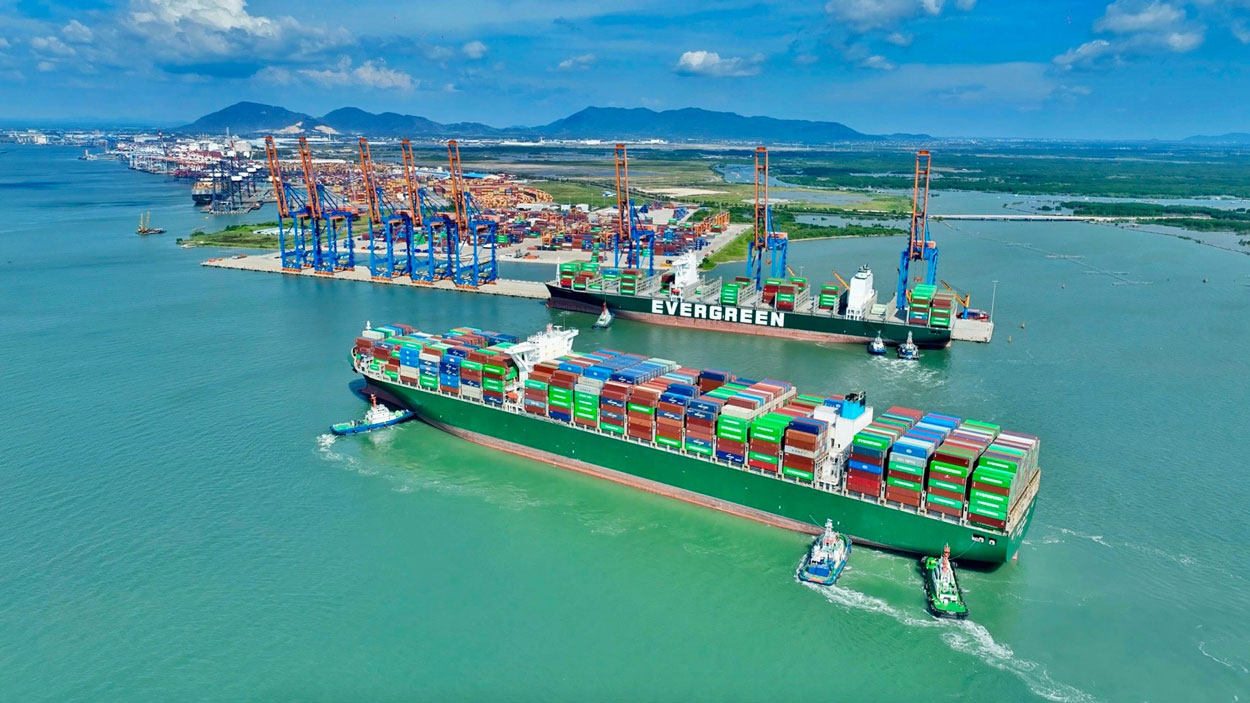
During main carriage, the container travels from the port of loading to the destination port, either through a direct sailing or via one or more transshipment ports where cargo may be transferred between vessels. Throughout this journey, key shipping information includes the Estimated Time of Departure (ETD), Estimated Time of Arrival (ETA), vessel schedules, transshipment updates, and potential delays or schedule changes. At Aurora Craft, we monitor shipment milestones such as ETD, ETA, and vessel schedule updates in coordination with our logistics partners. When delays or transshipment changes occur, our sales team communicates relevant updates to clients, helping them adjust their inventory and delivery plans accordingly.
In addition to shipment schedules, international buyers should understand the costs associated with ocean transportation. These charges can vary depending on shipping routes, container requirements, market conditions, and the agreed Incoterms.
| Cost Category | Explanation |
| Ocean Freight Charge | The core shipping cost paid to the carrier for transporting containers from the port of origin to the destination port. This is typically the largest portion of the total logistics cost. |
| Port Charges | Includes terminal handling charges (THC), container loading/unloading fees, and port handling costs at both origin and destination ports. |
| Fuel Surcharge | Additional charges adjusted based on fluctuations in global fuel prices. These fees may vary depending on market conditions. |
| Peak Season Surcharge (PSS) | Seasonal surcharges applied during periods of high shipping demand, such as holiday seasons or major retail import cycles in the US and Europe. |
| Customs-related Charges | Costs associated with customs declaration, document processing, and clearance procedures at export or import ports. |
| Documentation & Handling Fees | Covers Bill of Lading issuance, shipping paperwork processing, and administrative handling fees charged by carriers or forwarders. |
| Other Additional Charges | May include customs inspection fees, container detention or storage charges, document amendment fees, or other unexpected port-related costs depending on the shipping route. |
The applicability and allocation of these charges depend on the agreed Incoterms, carrier or forwarder quotations, and shipment-specific requirements.
In our export operations, common origin-side charges may include Terminal Handling Charges (THC), documentation and handling fees, VGM-related charges, and container seal fees. For U.S.-bound shipments, additional filing-related service charges may apply. These can include AMS-related charges associated with cargo manifest reporting by carriers or NVOCCs, while Importer Security Filing (ISF) is generally the responsibility of the U.S. ISF importer or its authorized agent. The applicable charges and their allocation depend on the shipping arrangements, service providers, and agreed commercial terms.
(*) Aurora Craft’s Practical Recommendation: Ocean freight rates and vessel availability can fluctuate throughout the shipping season. Booking in advance and maintaining close coordination with reliable freight forwarders can help businesses plan shipping costs more effectively, reduce the risk of vessel space shortages and shipment delays, and maintain more predictable transportation schedules. However, early booking does not necessarily guarantee lower freight rates or eliminate the possibility of schedule changes.
Step 9: Customs Clearance & Final Delivery
Once the furniture shipment reaches the destination port, the next stage involves import customs clearance, cargo release, and delivery to the agreed receiving location. Under FOB and CIF terms, import clearance and onward inland transportation are generally arranged by the buyer or their appointed logistics partners. Aurora Craft supports these processes by providing relevant export documentation and coordinating necessary shipment information within our agreed responsibilities. For DDP shipments, we have experience coordinating import clearance and destination delivery through logistics partners, subject to the destination country’s regulations and the agreed project arrangements.
Import Customs Clearance
Once the container arrives at the destination port, the customs broker will represent the importer in handling customs clearance procedures. The main tasks typically include:
- Filing import customs declarations according to local regulations
- Paying import duties and taxes (if applicable)
- Reviewing shipping documents and arranging cargo inspection if selected by customs
- Obtaining customs clearance approval so the shipment can be released from the port
In the furniture export logistics process, accurate documentation and proper HS code classification play a major role in helping shipments clear customs more smoothly and avoid unnecessary delays.
Inland Delivery to Warehouse
After customs clearance and cargo release, inland transportation is arranged by the party responsible under the agreed shipping terms. The shipment then moves from the destination port or terminal to the consignee’s warehouse, distribution center, or project site. This stage typically includes:
- Cargo release from the destination port or terminal
- Coordinating domestic trucking services
- Last-mile delivery to warehouses, retail distribution centers, or project sites
For certain commercial furniture projects, buyers may also arrange optional destination services through local service providers, such as on-site furniture installation, SKU-by-SKU inventory checks, and packaging waste removal after delivery.
Although this is the final step in the furniture export process, smooth coordination at destination remains extremely important. A well-organized delivery stage helps international buyers reduce operational disruptions and ensures products arrive in the expected condition and timeline.
How Long Does Furniture Shipping from Vietnam Take?
Shipping time is an important consideration in furniture export logistics from Vietnam, particularly when buyers plan inventory replenishment, retail distribution, or project deliveries. At Aurora Craft, we distinguish between production lead time and ocean transit time to help our clients establish realistic delivery expectations.
The following table provides indicative port-to-port ocean transit times for container shipments from the Ho Chi Minh City area to several major international markets.
| Destination Market | Estimated Ocean Transit Time |
|---|---|
| US West Coast (Los Angeles, Long Beach) | 18–30 days |
| US East Coast (New York, Savannah) | 30–45 days |
| Northern Europe (Rotterdam, Hamburg) | 30–50 days |
| Australia (Sydney, Melbourne) | 12–28 days |
These are approximate planning ranges, not guaranteed delivery times. Actual transit times vary depending on the shipping line, port pair, direct or transshipment routes, vessel schedules, and port conditions.
Based on our shipment experience, ocean transit times to destinations such as Japan and Australia can vary considerably depending on the shipping line, port pair, and whether transshipment is required. Buyers should confirm the latest vessel schedules when planning delivery timelines.
Importantly, ocean transit time represents only one part of the overall delivery timeline. Buyers should also account for production and packing, export handling, waiting time before vessel departure, import customs clearance, and inland transportation to the final destination. LCL shipments may require additional time for cargo consolidation and deconsolidation.
At Aurora Craft, we establish production schedules and cargo-ready dates based on confirmed order requirements, while coordinating relevant shipping milestones with our clients and logistics partners. For accurate delivery planning, we recommend confirming the latest vessel schedule and allowing reasonable time buffers for potential disruptions.
Common Furniture Export Logistics Risks & How to Minimize Them
Furniture export logistics involves multiple stages where unexpected issues can affect cargo condition, shipping schedules, and overall delivery costs. While some risks can be controlled during manufacturing and export preparation, others require close coordination between buyers, manufacturers, and logistics providers.
Understanding these risks early helps international buyers plan more effectively and reduce avoidable disruptions throughout the shipping process.
| Common Logistics Risk | Potential Impact | Risk Mitigation |
|---|---|---|
| Product Quality or Quantity Discrepancies | Shipment delays, shortages, or quality disputes. | Conduct final inspections and confirm approved quantities and SKU details before export packing. |
| Cargo Damage & Moisture Exposure | Scratches, breakage, deformation, or moisture-related damage. | Apply suitable protective packaging, moisture-control measures, and secure container loading methods. |
| Documentation & Shipment Data Discrepancies | Document amendments, customs delays, cargo holds, or additional charges. | Cross-check quantities, gross weights, container numbers, Commercial Invoices, Packing Lists, and B/L details before final submission. |
| Missed Shipping Cut-offs | Missed vessel departures, rescheduling, additional container charges, and delivery delays. | Monitor SI, VGM, and CY deadlines and coordinate alternative sailing arrangements when necessary. |
| Vessel Delays & Schedule Changes | Revised ETAs and disruptions to buyers’ inventory or project schedules. | Monitor vessel updates, coordinate with logistics partners, and communicate significant schedule changes to clients. |
| Customs Clearance & Inspection Issues | Additional document verification, physical inspections, cargo holds, or unexpected charges. | Review applicable customs requirements, maintain consistent shipment records, and coordinate with the responsible customs broker or authorities when necessary. |
***Aurora Craft’s Practical Experience: In our export operations, shipment documentation requires careful coordination between sales, warehouse staff, and our documentation team. We cross-check actual shipment quantities, gross weights, container numbers, and Bill of Lading details against the relevant shipping records before final confirmation. When discrepancies, vessel schedule changes, or missed cut-off deadlines arise, we coordinate with the responsible logistics partners and relevant authorities as appropriate to review available solutions and keep clients informed of potential delivery impacts.
In addition to preventive measures, proper shipment records can be valuable when cargo damage or shortages occur. Buyers should document any discrepancies upon receipt and notify the relevant carrier, freight forwarder, or insurer within applicable deadlines.
At Aurora Craft, we focus on quality verification, protective packing, accurate export documentation, and coordination with logistics partners within our agreed responsibilities. This approach helps minimize preventable export-related issues while supporting a more reliable furniture supply chain for our international clients.
Conclusion: Key Takeaways for International Furniture Buyers
Successful furniture export logistics from Vietnam requires more than arranging transportation. For international buyers, the key takeaway is to plan the entire shipment journey from the beginning, with clear shipping requirements, realistic delivery timelines, appropriate Incoterms, accurate documentation, and proper cargo protection. Understanding how these factors connect helps minimize avoidable delays, unexpected costs, and potential shipping damage.
As a furniture manufacturer and exporter in Vietnam, Aurora Craft focuses on product quality, export preparation, protective packaging, and coordination with clients and their logistics partners according to the agreed shipping terms. By aligning manufacturing readiness with export requirements and shipping schedules, we aim to support a smoother and more predictable furniture export process.
Planning to import furniture from Vietnam? Contact Aurora Craft to discuss your furniture requirements, shipment planning considerations, and how we can support the manufacturing and export preparation of your next order.

-
 Furniture Export Logistics from Vietnam: A Complete Guide for International Buyers
-
How Lead Time Impacts Furniture Manufacturing Cost
-
 MOQ in Furniture Manufacturing: Cost Drivers Buyers Often Miss
-
5 Best Factory Tips to Lower Custom Furniture Costs
-
Definition of MDF Wood: Properties, Types, and Applications Explained
-
How Hotel Furniture Wholesale Can Save Costs for Large Projects