

MOQ in Furniture Manufacturing: Cost Drivers Buyers Often Miss
Many furniture buyers accept a factory’s MOQ without fully understanding why a smaller order can trigger a sharp increase in unit price, reduce negotiation leverage, or make a project commercially unviable. In reality, MOQ in furniture manufacturing is determined by interconnected cost drivers, including raw material purchasing thresholds, machine setup, labor efficiency, packaging, and logistics. This guide breaks down the factors buyers often overlook, explains how batch production affects pricing, and helps importers evaluate supplier quotations and optimize order quantities when sourcing furniture from Vietnam.
What MOQ Means in Furniture Manufacturing and Why It Matters in Vietnam
In the furniture supply chain, MOQ in furniture manufacturing refers to the minimum order volume a factory requires to produce an item economically. This threshold is shaped by raw material purchasing quantities, machine setup requirements, labor allocation, component and packaging minimums, production-line utilization, and order-management costs.
Many international buyers entering the market initially view MOQ as an arbitrary barrier imposed by suppliers. In practice, factory MOQ requirements reflect the production volume needed to maintain operational efficiency and commercially sustainable margins for manufacturers while offering buyers more competitive unit pricing.
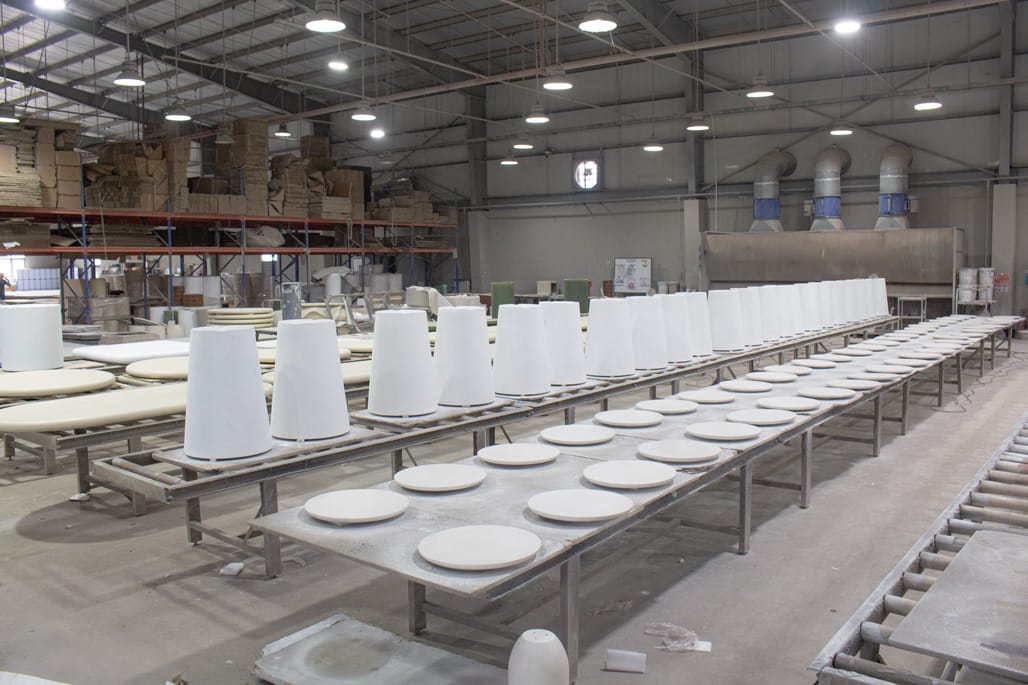
This is particularly relevant when sourcing furniture from Vietnam, where many export-oriented factories are structured around batch production, standardized production runs, and container-efficient order volumes. Their MOQ requirements are therefore closely linked to material procurement, machine scheduling, finishing processes, packaging quantities, SKU consolidation, and shipment planning.
Orders placed below the required threshold may be declined or quoted at a substantially higher unit price because fixed production costs must be distributed across fewer units. Understanding the cost structure behind factory MOQ helps buyers evaluate quotations more accurately, plan order volumes effectively, control sourcing costs, and protect profit margins.
How Batch Production Determines MOQ in Furniture Manufacturing
Machine Setup and Production-Line Efficiency
Large export-oriented furniture factories rarely process each product as a completely separate job. Instead, components with the same design, dimensions, materials, and finish are grouped into production batches and moved through a coordinated sequence of machining, drilling, sanding, finishing, assembly, and packaging operations.
Before each production run, the factory must prepare and calibrate its equipment. This may include programming CNC cutting paths, adjusting drilling coordinates, changing tools and jigs, setting sanding parameters, preparing finishing materials, and balancing labor across the line. These setup activities require time and labor regardless of whether the factory produces 20 units or 500 units.
For larger batches, the setup cost is distributed across more products, while machines can operate for longer periods with fewer interruptions. Small runs, by contrast, require more frequent changeovers, create idle time between processes, reduce throughput, and increase the setup cost allocated to each unit. The result is a higher unit price and, in some cases, an order that is no longer commercially viable for the factory.
This relationship between fixed setup requirements and production-line utilization is one of the main reasons factories establish MOQ in furniture manufacturing. The minimum volume allows manufacturers to use equipment efficiently, maintain a stable workflow, and keep unit costs within a commercially acceptable range.
Why Small Production Runs Increase Unit Costs
Small production runs are a major reason MOQ in furniture manufacturing is necessary, because many manufacturing expenses do not decrease in proportion to order volume. Even when a factory produces only a limited number of units, it must still allocate machinery, supervisors, technical staff, production space, quality-control resources, and line time to the order.
These costs may include:
- Machinery depreciation and equipment maintenance
- Production planning and order-management expenses
- Machine setup, calibration, and line changeovers
- Factory utilities and production supervision
- Quality inspection, packaging preparation, and internal material handling
These fixed and indirect expenses form part of the broader Vietnam furniture cost breakdown, but their impact per unit becomes more pronounced when production volumes are low. For a larger batch, these expenses are distributed across hundreds or thousands of units, reducing the cost allocated to each product. For a small run, the same or similar overhead must be absorbed by far fewer units, causing the unit price to rise sharply.
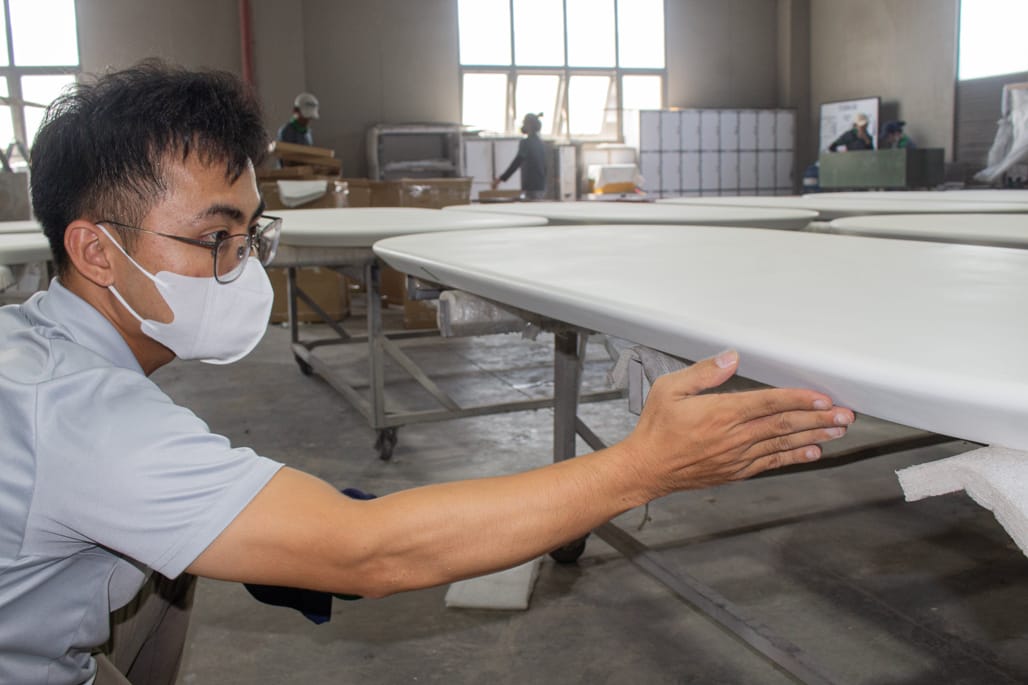
Small orders may also leave machinery underutilized, interrupt scheduled production, and occupy capacity that could otherwise be assigned to a more efficient batch. This is why factories often apply higher prices, setup surcharges, or minimum order requirements rather than accepting a low-volume order at the standard unit price. In this context, MOQ in furniture manufacturing helps ensure that production costs are distributed across a commercially viable number of units.
How Material, Finishing, and Packaging Batches Affect MOQ in Furniture Manufacturing
MOQ in furniture manufacturing is not determined by production machinery alone. Minimum order requirements are also influenced by the batch sizes imposed by material suppliers, finishing processes, and packaging vendors. Even when a factory is willing to produce a small quantity, its upstream suppliers may require minimum purchases that exceed the volume needed for that order.
Raw materials such as timber, veneer, engineered panels, hardware, fabric, foam, and metal components are often purchased in standard bundles, sheets, rolls, cartons, or supplier-defined lots. Custom specifications can increase these requirements further. A buyer requesting a unique wood species, fabric color, hardware finish, or panel thickness may force the factory to purchase more material than the order will consume. Unless the remaining stock can be used for future projects, the unused quantity must be absorbed into the quotation or reflected in a higher MOQ.
Finishing operations also work more efficiently in batches. Stains, paints, lacquers, and coatings require color matching, mixing, spray-booth preparation, sample approval, drying space, and line cleaning between finishes. Producing a small quantity in a custom color can therefore generate nearly the same preparation and changeover costs as a much larger run. Factories may respond by setting a minimum quantity per finish, applying a color surcharge, or asking buyers to consolidate multiple items under the same finish.
Packaging creates another layer of minimum-volume pressure. Printed cartons, molded foam, protective inserts, labels, manuals, and barcode materials are commonly ordered from specialized suppliers that impose their own minimum quantities. A low-volume furniture order may therefore require the factory to purchase packaging for more units than it is producing. Buyers can reduce this cost by using standard cartons, generic labels, shared packaging dimensions, or consolidated packaging specifications across several SKUs.
Together, these material, finishing, and packaging constraints help explain why MOQ in furniture manufacturing may remain high even when machine capacity is not the main issue. For buyers, the most effective way to reduce factory MOQ is often not to negotiate the number alone, but to simplify specifications, standardize finishes, consolidate materials, and align packaging requirements across the product range.
Cost Drivers Behind MOQ in Furniture Manufacturing at Low Order Volumes
Production-Line Disruptions and Labor Reallocation Costs
One of the main operational factors behind MOQ in furniture manufacturing is the cost created by production-line disruptions and labor reallocation. When a factory introduces a new model, finish, or specification into an established production schedule, the line may need to pause for equipment changeovers, technical adjustments, material preparation, and quality-control setup.
The cost of this interruption extends beyond machine downtime. Production planners may need to rearrange the sequence of existing orders, while operators, technicians, supervisors, and quality-control staff must be reassigned to support the new batch. During the transition, some workers may remain idle, while downstream teams may have to wait for components from cutting, machining, sanding, or finishing. In other cases, overtime may be required to restore the original production schedule after the small batch has been completed.
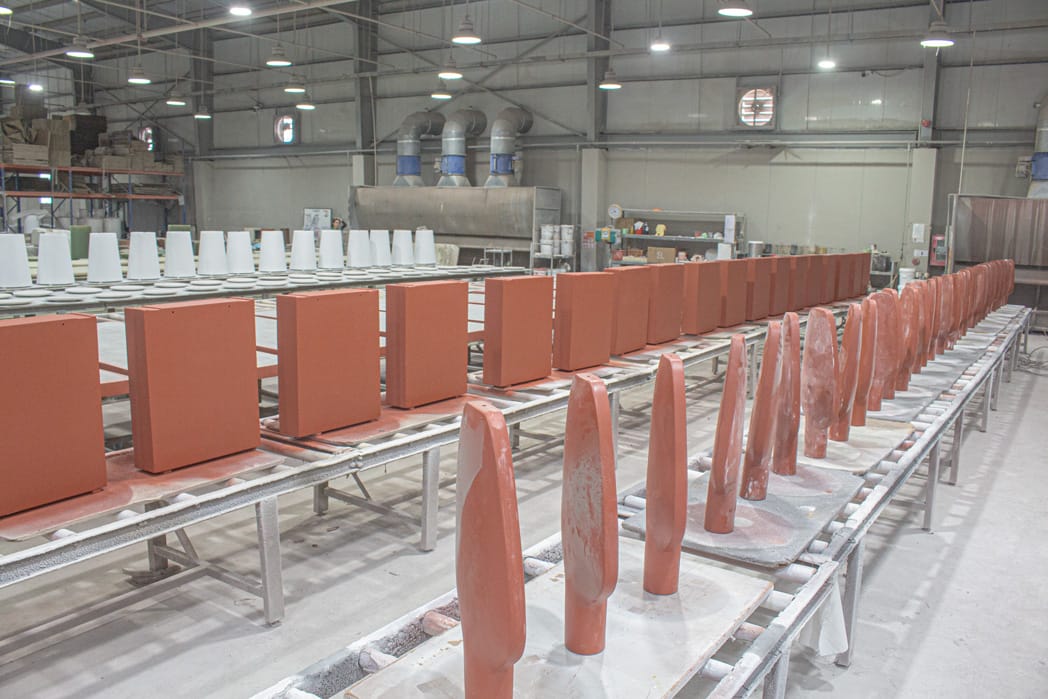
A low-volume order can also affect other jobs already moving through the factory. Interrupting a larger production run may delay subsequent batches, increase work-in-progress inventory, and create uneven workloads between departments. These effects reduce overall line utilization and generate non-productive labor time even when the small order itself requires only a limited number of manufacturing hours.
When the order volume is sufficiently large, these disruption and reallocation costs can be distributed across many units. At low quantities, however, the same costs must be absorbed by a much smaller batch, significantly increasing the cost per product. This cost structure helps explain why MOQ in furniture manufacturing is often used to protect production efficiency, limit scheduling disruption, and ensure that each order remains commercially viable.
Higher Material Costs and Lower Wood Yield at Small Volumes
Higher material costs and lower production yield are important cost drivers behind MOQ in furniture manufacturing, particularly when order volumes are small. Furniture manufacturers operate within a broader supply network and depend on upstream suppliers for raw materials, hardware, finishes, and other production inputs. These suppliers often apply their own minimum purchase quantities, standard pack sizes, or minimum order values. As a result, when a buyer’s order volume is too low to support efficient material procurement, the factory may be unable to access volume discounts or direct supplier pricing.
Instead, the factory may need to purchase smaller lots through distributors, pay higher freight costs per unit of material, or buy full bundles, cartons, sheets, or rolls even when only part of the quantity is required for the order. Custom specifications can create additional costs because excess timber, veneer, panels, hardware, fabric, or coatings may be difficult to reuse in future production. These costs are typically incorporated into the quoted unit price rather than listed separately on the buyer’s invoice.
Material yield is another important factor affecting MOQ in furniture manufacturing. In panel-based furniture production, for example, components are cut from standard-size boards, and nesting software is used to arrange cutting patterns efficiently. Larger production batches give engineers more component combinations to work with, improving sheet utilization and reducing off-cuts. Small batches offer fewer opportunities to optimize the cutting layout, while fixed losses from saw kerf, trimming, defects, grain direction, and dimensional allowances must be distributed across fewer finished units.
Off-cuts are not always unusable, but pieces that are too small, material-specific, or difficult to match with future orders may become stranded inventory or workshop waste. The same principle applies to natural wood, where grading losses, color matching, defects, and machining allowances mean that the gross material input is higher than the volume visible in the finished product.
For buyers, this means the material cost of a low-volume order includes more than the wood, panel, fabric, or hardware contained in each unit. It also reflects supplier purchase minimums, lost volume discounts, cutting and grading losses, and excess material that cannot be reused economically. These factors help explain why MOQ in furniture manufacturing and unit prices tend to increase when order quantities are low.
SKU Fragmentation and Customization Costs
When evaluating MOQ in furniture manufacturing, buyers should look beyond the total purchase-order volume. A large total order does not always create efficient production if the volume is divided across too many SKUs, dimensions, finishes, materials, or packaging specifications. From a factory’s perspective, an order for 500 units across ten different models is not equivalent to producing 500 units of one standardized design. Each SKU may require its own bill of materials, technical drawings, production routing, machine settings, quality-control criteria, labeling, and packaging configuration.
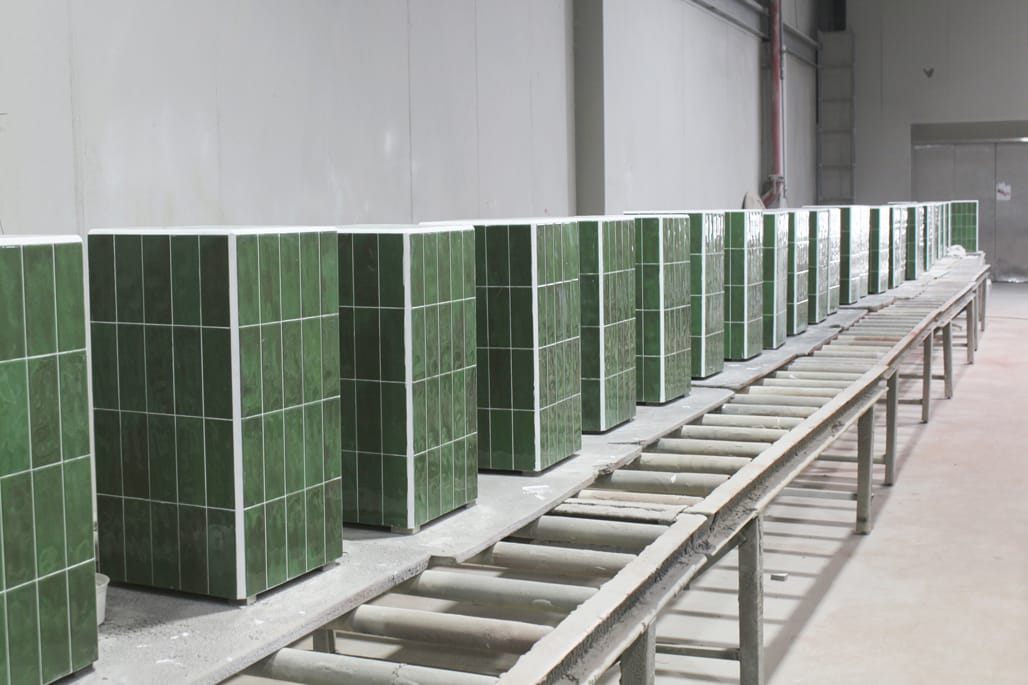
Customization increases this complexity further. Different finishes may require separate color matching, sample approval, paint preparation, spray-booth changeovers, and cleaning between production runs. Custom hardware, fabrics, dimensions, or construction details can also prevent the factory from sharing materials and components across the order. As a result, each variation effectively becomes a smaller production batch with its own setup and coordination costs.
SKU fragmentation also increases planning and administrative work. Production teams must schedule more changeovers, procurement staff must manage additional material specifications, and quality-control teams must inspect multiple standards within the same order. The greater the number of variants, the higher the risk of labeling errors, finish mismatches, component mix-ups, and packaging mistakes.
For this reason, factories may apply separate minimums by model, finish, material, fabric, or packaging design rather than relying on one MOQ for the entire purchase order. Buyers can reduce these costs by consolidating finishes, sharing components across models, limiting unnecessary variations, and concentrating more volume in fewer SKUs. In practice, MOQ in furniture manufacturing depends not only on total order quantity, but also on the production depth of each individual batch.
How LCL and Low Container Utilization Increase Unit Costs
After production and packaging are complete, shipment volume becomes another important factor in the buyer’s total cost. MOQ in furniture manufacturing determines whether an order is economically viable to produce, while container utilization determines whether it is economical to ship. These two thresholds are related, but they are not the same: an order may meet the factory’s MOQ and still be too small to use container space efficiently.
When the packed volume is insufficient to justify a dedicated container, buyers may consider Less than Container Load (LCL) shipping instead of Full Container Load (FCL). LCL allows cargo from multiple shippers to share container space, while FCL gives one shipper exclusive use of the container. LCL can be practical for smaller orders, but its consolidation structure often creates higher logistics costs per cubic meter and per finished unit.
| Comparison criteria | LCL shipping | FCL shipping |
| Container use | Goods share a container with cargo from other shippers. | The shipment uses a dedicated container. |
| Freight basis | Usually charged by volume or chargeable weight, subject to minimum fees. | Usually quoted per container, plus applicable origin and destination charges. |
| Handling and CFS charges | Consolidation, deconsolidation, CFS handling, and documentation charges may be significant per CBM. | Fixed logistics charges can be distributed across a larger shipment volume. |
| Handling exposure | Cargo may pass through additional warehouses and handling stages. | Cargo is generally loaded once and remains sealed until destination handling. |
| Packaging requirements | May require additional palletization, crating, corner protection, or reinforcement. | Standard export packaging may be sufficient when the load is properly secured. |
| Unit-cost impact | Can increase landed cost per unit when shipment volume is low. | Usually becomes more cost-efficient per unit as container utilization improves. |
The main cost issue with LCL is not simply the ocean freight rate. Buyers may also incur minimum CFS charges, consolidation fees, documentation costs, warehouse handling, and destination deconsolidation charges. Because some of these expenses do not decrease proportionally with shipment size, low-volume orders that only meet the minimum MOQ in furniture manufacturing may still carry a disproportionately high logistics cost per unit.
Furniture is also bulky and relatively vulnerable to scratches, dents, moisture, and handling damage. Additional handling during consolidation and deconsolidation can therefore require stronger packaging and may increase both packaging expense and cargo risk. FCL generally reduces handling exposure, although its cost advantage depends on how efficiently the container is loaded.
For this reason, buyers should evaluate both production volume and packed cubic volume before confirming an order. Consolidating compatible SKUs, aligning delivery schedules, combining shipments, and optimizing carton dimensions can improve container utilization and reduce landed cost per unit. When assessing MOQ in furniture manufacturing, the objective is not necessarily to fill every container completely, but to select an order quantity and shipping method that provide the most economical balance between production cost, freight, handling, inventory, and delivery timing.
How Buyers Can Manage MOQ More Effectively
MOQ in furniture manufacturing reflects the production volume required to distribute setup costs, maintain line efficiency, purchase materials economically, and manage packaging and logistics at a commercially viable level. Treating it as an arbitrary supplier barrier can lead buyers to focus only on reducing order quantity while overlooking the higher unit prices, surcharges, scheduling constraints, and freight inefficiencies that may follow.
A more effective approach is to evaluate MOQ as part of the total cost structure. Buyers can improve production feasibility by consolidating volume across fewer SKUs, standardizing materials and finishes, sharing components between models, simplifying packaging specifications, and coordinating shipment schedules to improve container utilization. For long-term sourcing programs, blanket orders or annual framework agreements can also help factories plan material purchases and production capacity while allowing buyers to release quantities in scheduled batches.
Before confirming an order, buyers should ask suppliers to clarify whether the minimum applies per model, finish, material, packaging design, or total purchase order. Comparing the quoted unit price with inventory risk, lead time, and total landed cost will help determine whether increasing the order, accepting a setup surcharge, or simplifying the specification is the most economical option.
For businesses sourcing furniture from Vietnam, working with a manufacturer that can explain the cost structure behind its MOQ is often more valuable than simply choosing the lowest minimum quantity. Aurora Craft supports buyers in reviewing product specifications, consolidating SKUs, selecting commercially practical materials, and developing MOQ options aligned with production and shipment requirements. Contact Aurora Craft to discuss a sourcing plan tailored to your product range, target order volume, and delivery schedule.
-
 Furniture Export Logistics from Vietnam: A Complete Guide for International Buyers
 -
How Lead Time Impacts Furniture Manufacturing Cost
-
 MOQ in Furniture Manufacturing: Cost Drivers Buyers Often Miss
 -
5 Best Factory Tips to Lower Custom Furniture Costs
-
Definition of MDF Wood: Properties, Types, and Applications Explained
-
How Hotel Furniture Wholesale Can Save Costs for Large Projects


