
Which Wood for Outdoor Furniture is The Most Durable and Stylish?
The wooden furniture market today offers a wide spectrum of choices – from dense, natural hardwoods to pressure-treated timbers. Each material carries its own strengths and compromises, so choosing a supplier can’t hinge only on durability or aesthetics.
More importantly, businesses must identify which wood for outdoor furniture truly fits their project, budget and the climatic realities of their target market. In this article, Aurora Craft will guide you through the key selection criteria, present clear comparisons, and help pinpoint the optimal wood solutions for outdoor spaces. Let’s explore.
What are the key criteria when selecting wood for outdoor furniture?
To determine the right wood for outdoor furniture that matches your project needs, businesses should carefully consider the following factors:
- Moisture resistance: This directly affects the product’s lifespan when exposed to rain, dew, or high humidity. Naturally oily woods such as teak or ipe are renowned for their stability, while more common species require thorough treatment to achieve lasting durability.
- Pest resistance: In many tropical markets, insects and termites pose a constant threat. If the chosen wood does not possess natural resistance, businesses must look into chemical treatments or opt for pressure-treated. However, these options may increase costs and also require additional safety certifications.
- Weather durability: Harsh sunlight, heavy rain, and fluctuating temperatures can cause wood to fade or crack over time. That’s why when selecting wood for outdoor furniture, it’s important to align choices with the climate of your target market. Teak, ipe, and cedar are often safe bets thanks to their exceptional stability.
- Minimizing cracking: Outdoor furniture needs to retain its form and structural integrity over the years. Hardwoods rich in natural oils typically shrink less and are more resistant to cracking under changing humidity and temperature conditions, making them an ideal choice.
- Maintenance requirements: Some types of wood demand regular sealing or surface treatments to maintain their appearance, while premium options need little upkeep. Factoring in long-term maintenance costs is essential when planning for outdoor projects.
- Cost considerations: The real value of wood in furniture manufacturing lies not only in its upfront price but also in the product’s lifecycle. Investing early in durable, long-lasting materials reduces replacement and repair costs in the future – particularly for large-scale projects like hotels, resorts, or retail chains.
For many hospitality and commercial businesses, investing in custom wood outdoor furniture also provides greater flexibility in material selection, branding, ergonomics, and long-term product positioning.
The Best Types of Wood for Outdoor Furniture
Teak Wood
For centuries, teak has been regarded as the iconic material in shipbuilding and premium outdoor furniture manufacturing.
What makes it stand out is its exceptionally high natural oil content, a rare quality among hardwoods. This natural oil grants teak outstanding resistance to water, making it one of the most reliable waterproof outdoor wood options. It minimizes cracking, warping, and even provides natural protection against termites and pests.
Visually, teak offers a warm golden-brown tone with fine grains that develop into an elegant silver-gray patina over time – a feature highly favored by designers across the US and Europe. Beyond its beauty, teak is also remarkably versatile: it can be cut, joined, turned, carved, and finished with ease, making it suitable for a wide range of applications.
This is why teak consistently ranks as one of the most preferred types of wood for outdoor furniture, especially in luxury settings. It is commonly used for garden tables and chairs, outdoor decking, or resort and hotel lounge sets.

That said, its price point is relatively high, mainly due to limited natural supply. Countries like Myanmar and Indonesia have tightened harvesting regulations, which makes sourcing legally certified teak increasingly challenging. However, when considering its long lifespan – often lasting for decades, teak remains a worthwhile long-term investment for businesses targeting high-end markets.
Eucalyptus Wood
Among the widely recognized wood for outdoor furniture options, eucalyptus is a material that deserves a solid place on the list.
Its first advantage lies in strength and durability. When kiln-dried and properly treated, eucalyptus can withstand sun and rain for about 10 – 15 years, making it a practical choice for mid-range outdoor projects such as gardens, parks, or café patios. On the aesthetic side, its light tone, attractive grain, and smooth texture make it visually appealing and versatile for various design styles.
That said, eucalyptus is not entirely immune to outdoor conditions. Compared to premium hardwoods like teak or ipe, it requires more upkeep, regular oiling to maintain its luster and protective layer, along with UV-resistant coatings to extend its lifespan.
On the supply chain side, eucalyptus stands out for its fast regeneration and stable availability, giving it a strong sustainability advantage. For this reason, it is increasingly favored by businesses targeting markets that value eco-friendliness and green responsibility throughout the furniture supply chain.
Acacia Wood
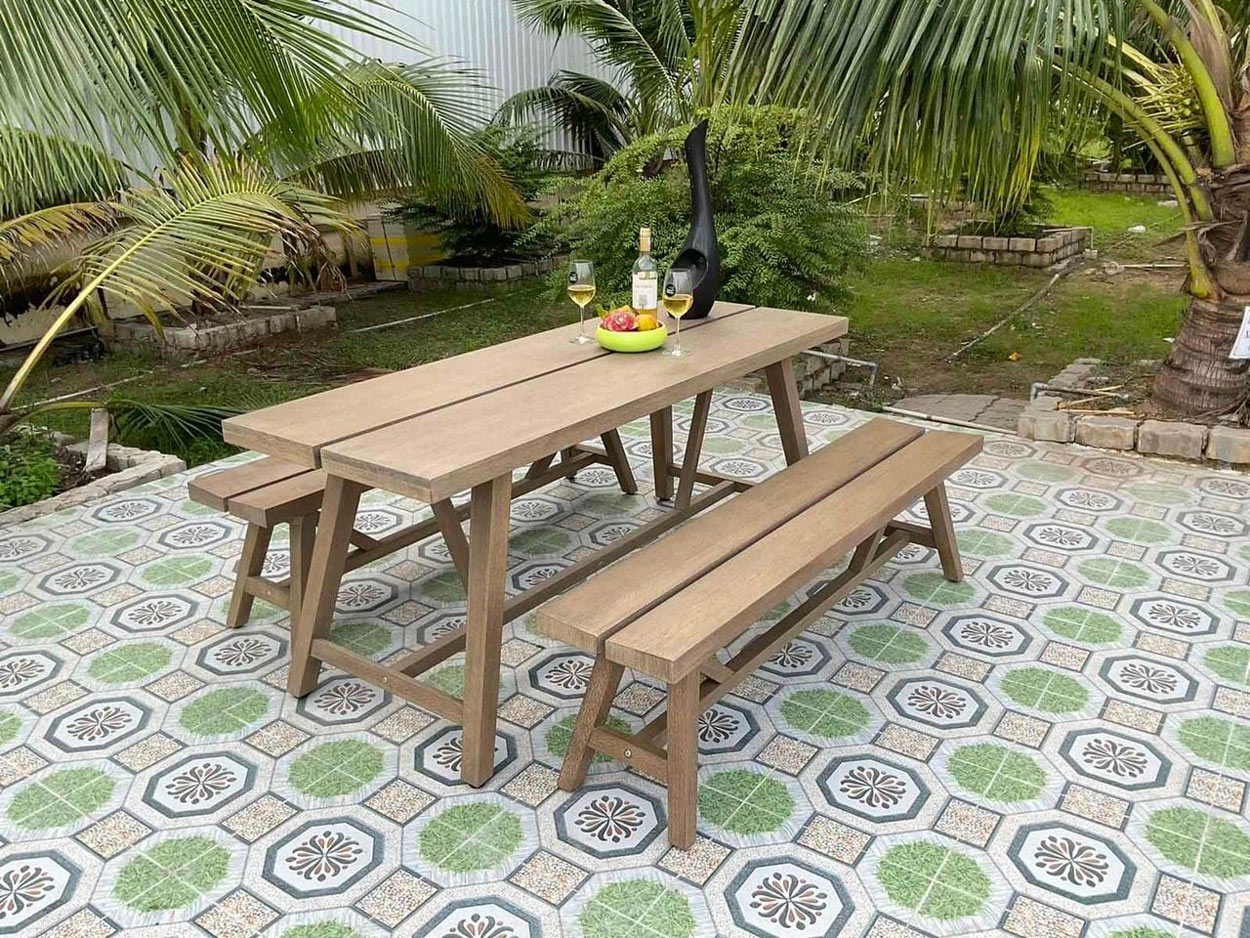
Acacia is one of the most popular wood for outdoor furniture choices among businesses today. As a natural hardwood, it offers impressive strength and load-bearing capacity, with minimal warping when properly kiln-dried and treated.
Its standout advantage lies in moisture resistance, making it particularly well-suited for humid, tropical climates. The wood’s distinctive, elegant grain brings a sense of warmth and sophistication to both indoor and outdoor applications.
On top of that, acacia comes at a more accessible price point compared to many other hardwoods, allowing companies to optimize budgets without compromising too much on quality. With sustainable plantation sources, it is also emerging as an eco-friendly option for furniture production.
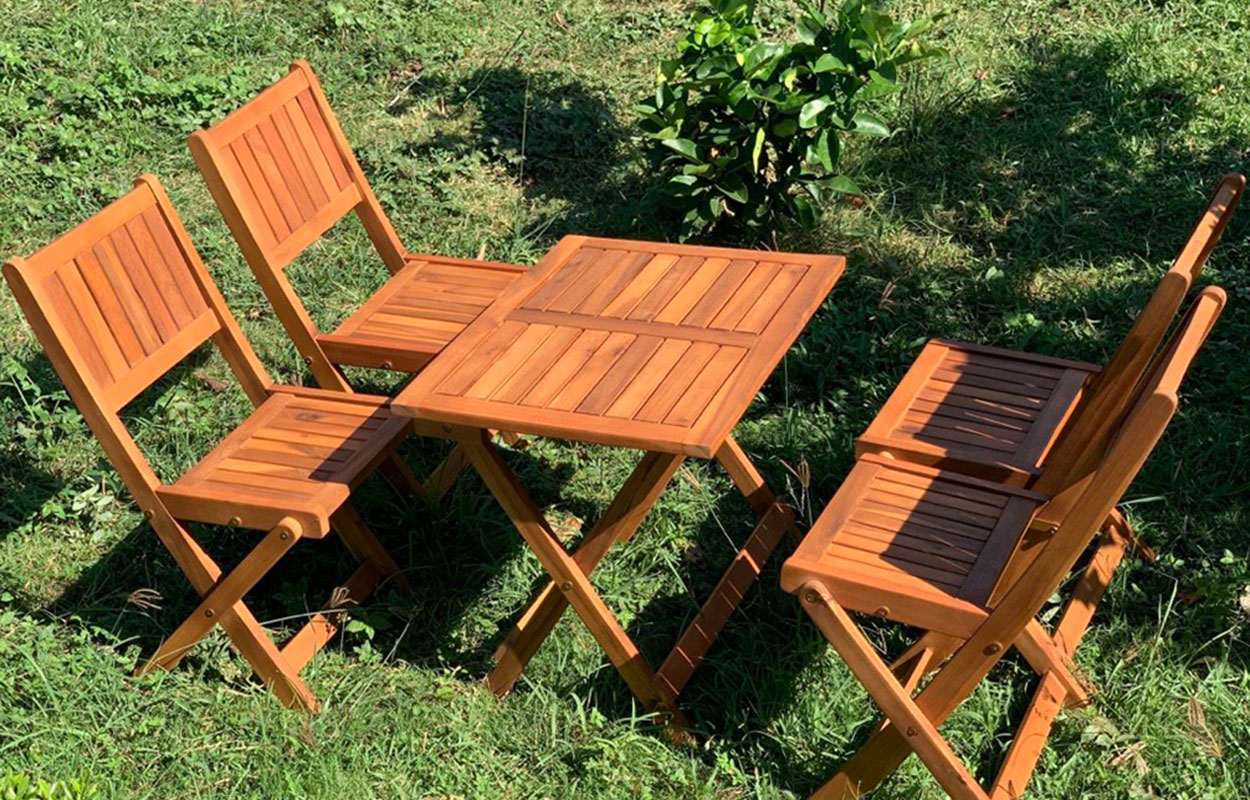
However, acacia does come with some limitations. Unlike premium woods such as teak or ipe, its lifespan is shorter if maintenance is neglected. To preserve its color and structural integrity, acacia requires consistent care, regular oiling or sealing to protect against fading, cracking, and water penetration caused by constant exposure to sun and rain.
Ipe Wood
Among all the wood for outdoor furniture, ipe consistently ranks at the very top when it comes to durability and weather resistance.
Recognized as one of the hardest woods in the world, ipe has an exceptionally high density that makes it almost waterproof. It also possesses natural resistance to termites, mold, and decay, without the need for chemical treatments. Thanks to these properties, outdoor furniture made from ipe can last 25 to 40 years, significantly outlasting most other wood types.
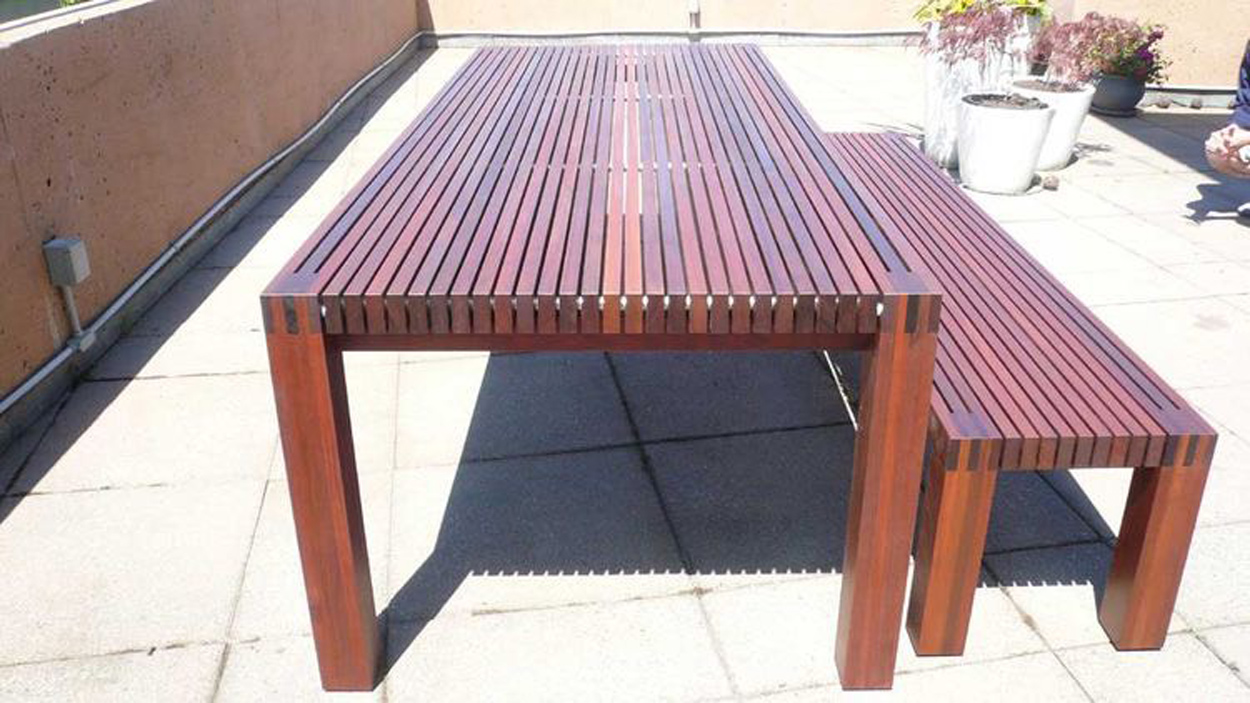
The strength of ipe is not only in its mechanical performance but also in its refined aesthetics. With color variations ranging from rich reddish-brown to golden hues and deep, elegant browns, it brings a timeless beauty to outdoor designs. When freshly cut or processed, it even carries a subtle, pleasant scent. This makes ipe an excellent choice for poolside decking, piers, luxury dining sets, and premium wood for patio furniture.
That said, its extreme hardness and density make ipe challenging to work with. Specialized machinery and skilled craftsmanship are essential to shape it properly. On top of that, it belongs to the higher price tier, making it most sought after in North America, the Middle East, and Europe, markets where clients are willing to invest in luxury outdoor projects built to last.
For businesses targeting the premium segment, ipe represents not just a material, but a statement of quality and brand prestige.
Cedar Wood
Cedar is a naturally durable softwood prized for its inherent resistance to termites and insects, thanks to the aromatic oils it contains. These natural oils act as a built-in defense, reducing the need for heavy chemical treatments. Beyond that, cedar features a stable grain structure that resists warping, splitting, and cracking even when exposed to fluctuations in temperature and humidity, an important advantage for long-term outdoor use.
Its warm color tones and distinctive fragrance have also made cedar a favorite in crafting wood for patio furniture such as garden benches, pergolas, and even outdoor soaking tubs. This combination of charm and practicality allows cedar furniture to bring both beauty and comfort to exterior spaces.
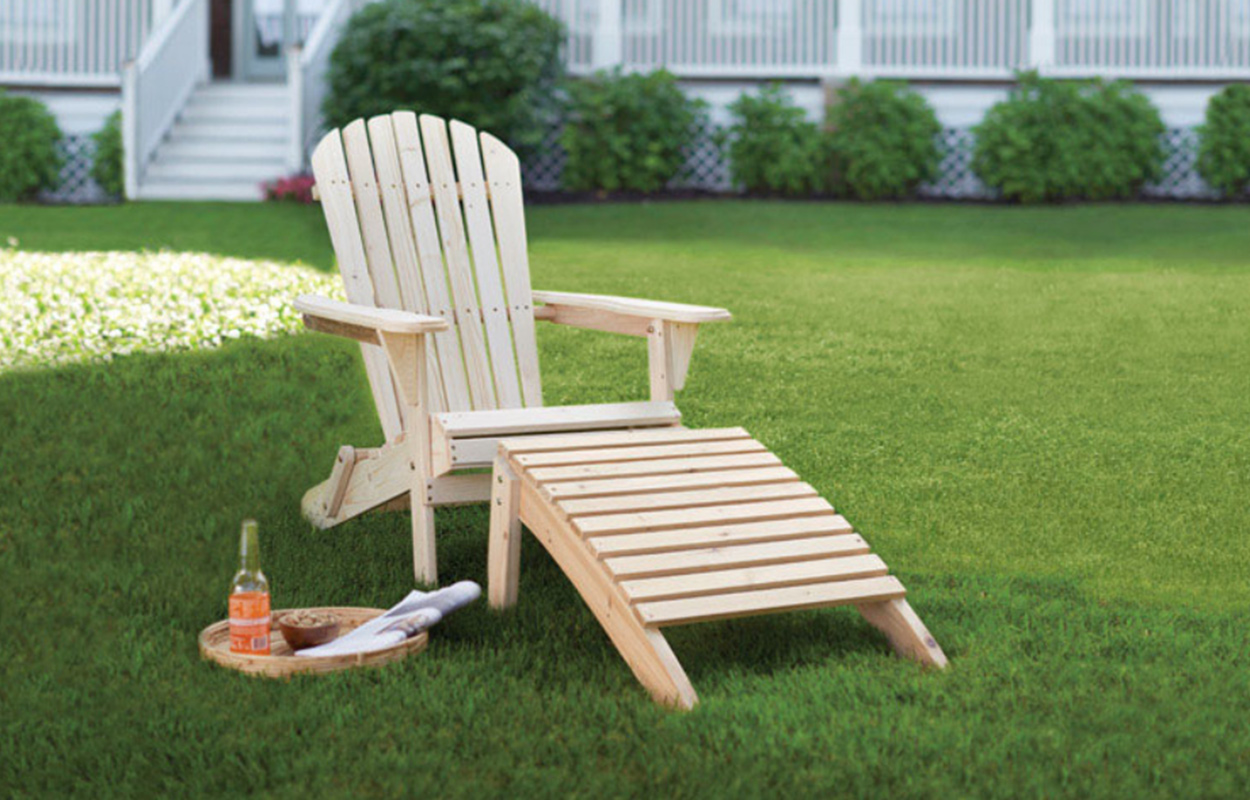
But cedar does not offer the same long-term lifespan as teak or ipe. To preserve its look and performance, it requires periodic maintenance, typically oiling or UV-protective coatings. However, with abundant availability and a more accessible price point, cedar remains one of the more practical types of wood for outdoor furniture for businesses looking to balance cost, aesthetics, and functionality.
Laminated bamboo wood
Laminated bamboo wood is engineered by bonding thin strips of bamboo with specialized adhesives and then pressing them under high heat and pressure. This process gives the material far greater hardness and dimensional stability compared to raw bamboo.
Because of its manufacturing method, laminated bamboo is often classified as engineered wood for outdoor furniture, offering enhanced strength and an extended service life when exposed to the elements.
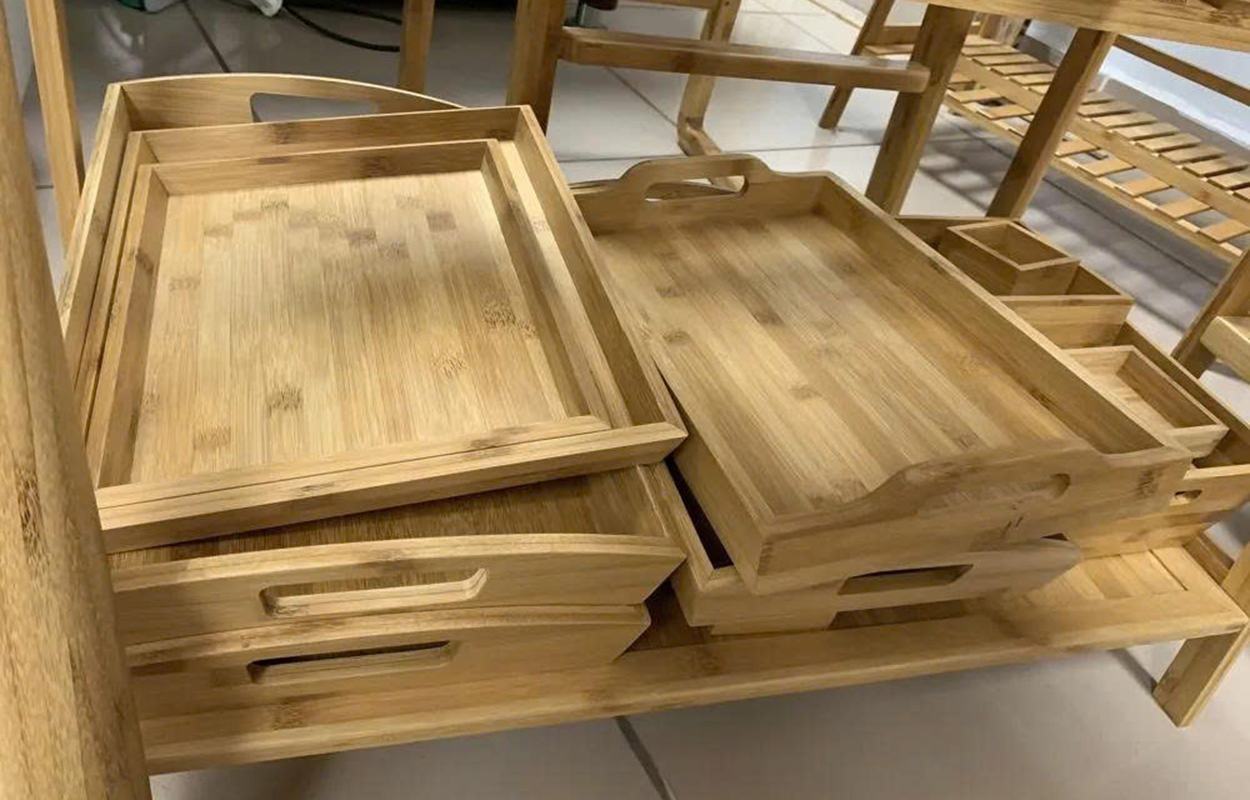
The surface of bamboo panels retains a natural warmth and organic beauty, making them suitable for a wide range of modern garden and outdoor furniture designs. Even more importantly, bamboo is one of the fastest-regenerating resources on the planet, making it a highly sustainable choice.
This eco-friendly advantage has earned bamboo growing recognition in European and North American markets, where the demand for “green” materials is increasingly strong. For businesses aiming to align their products with sustainable values, bamboo composite has emerged as a standout wood for outdoor furniture option.
That said, bamboo is still vulnerable to moisture if not properly protected. Regular waterproof coatings and ongoing maintenance are essential to preserve both durability and aesthetics over the long term.
Plywood
Plywood is created by stacking multiple thin layers of natural wood veneer, each placed perpendicular to the previous one, and compressing them under heat and pressure. This cross-grain structure not only improves strength but also reduces the risk of warping.
In recent years, plywood has gained traction as a material for wood for outdoor furniture, thanks to its versatility. It can be easily shaped, adapted into diverse designs, and – perhaps most importantly – offers a much lower cost than solid hardwoods. This makes it an attractive budget-friendly alternative for businesses aiming to optimize project expenses without entirely sacrificing functionality.
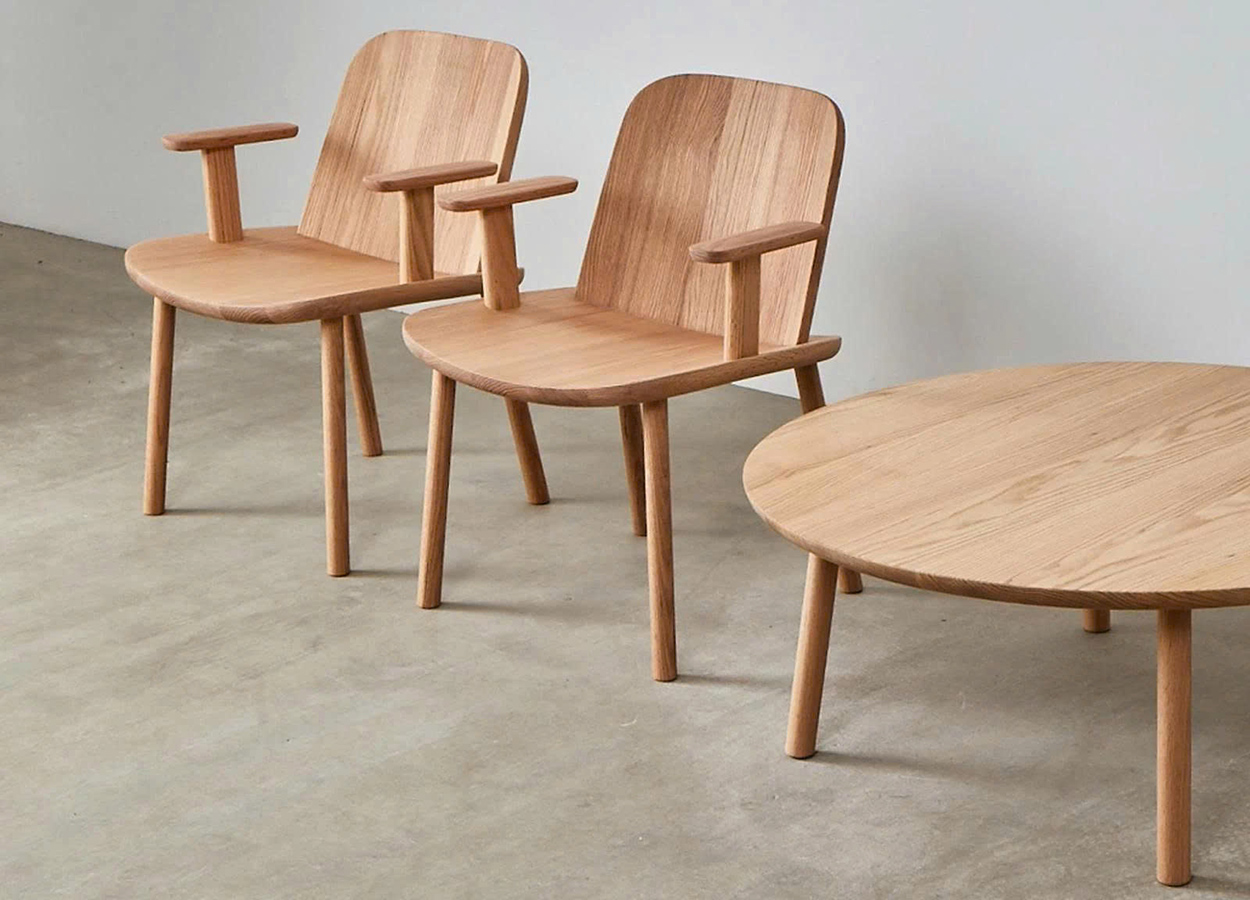
Like plywood, MDF wood is also commonly used in furniture manufacturing thanks to its smooth surface, easy machinability, and cost efficiency. However, because of its fiber-based structure, MDF is generally better suited for indoor furniture and controlled environments.
However, plywood comes with limitations. Its durability heavily depends on the type of adhesive used and the quality of the lamination process. Prolonged exposure to moisture or inadequate surface treatment can lead to delamination, drastically shortening its lifespan. As such, businesses considering plywood should factor in protective finishes and usage environments when evaluating it for outdoor projects.
Comparative Table of Popular Woods for Outdoor Furniture
| Wood Type | Outdoor Durability | Termite Resistance | Water Resistance | Workability | Cost | Key Advantages |
| Teak | 20 – 30 years | Excellent | Outstanding | Excellent | High | Extremely durable, naturally termite-resistant, minimal warping, beautiful color, ideal for premium furniture |
| Ipe | 25 – 40 years | Excellent | Outstanding | Difficult | High | Stone-hard, exceptionally strong, long-lasting, termite-resistant, minimal warping |
| Acacia | 7 – 10 years | Good | Good | Easy | Low | Affordable, easy to craft, attractive grain, ideal for mid-range outdoor furniture |
| Eucalyptus | 10 – 15 years | Good | Fair | Medium | Low | Cost-effective, easy to process, bright color, suitable for mid-range outdoor projects |
| Cedar | 5 – 10 years | Good | Fair | Easy | Low | Naturally insect-repellent, lightweight, stable, pleasant fragrance |
| Laminated Bamboo | 10 – 15 years (treated) | Average | Fair | Medium | Medium | Rapidly renewable, eco-friendly, attractive bamboo pattern, aligned with green trends |
| Exterior-grade Plywood | 3 – 7 years | Average | Average | Easy | Very Low | Low cost, easy to install, can be laminated/veneered for moisture protection, best for temporary or budget projects |
=> From the comparison above, teak clearly stands out as the best wood for garden furniture
Its balance of durability, water resistance, and natural elegance makes it the leading choice for premium outdoor projects. While Ipe is unmatched in hardness and longevity, it can be difficult to work with, whereas teak is far more versatile in processing—giving businesses greater flexibility in design and production.
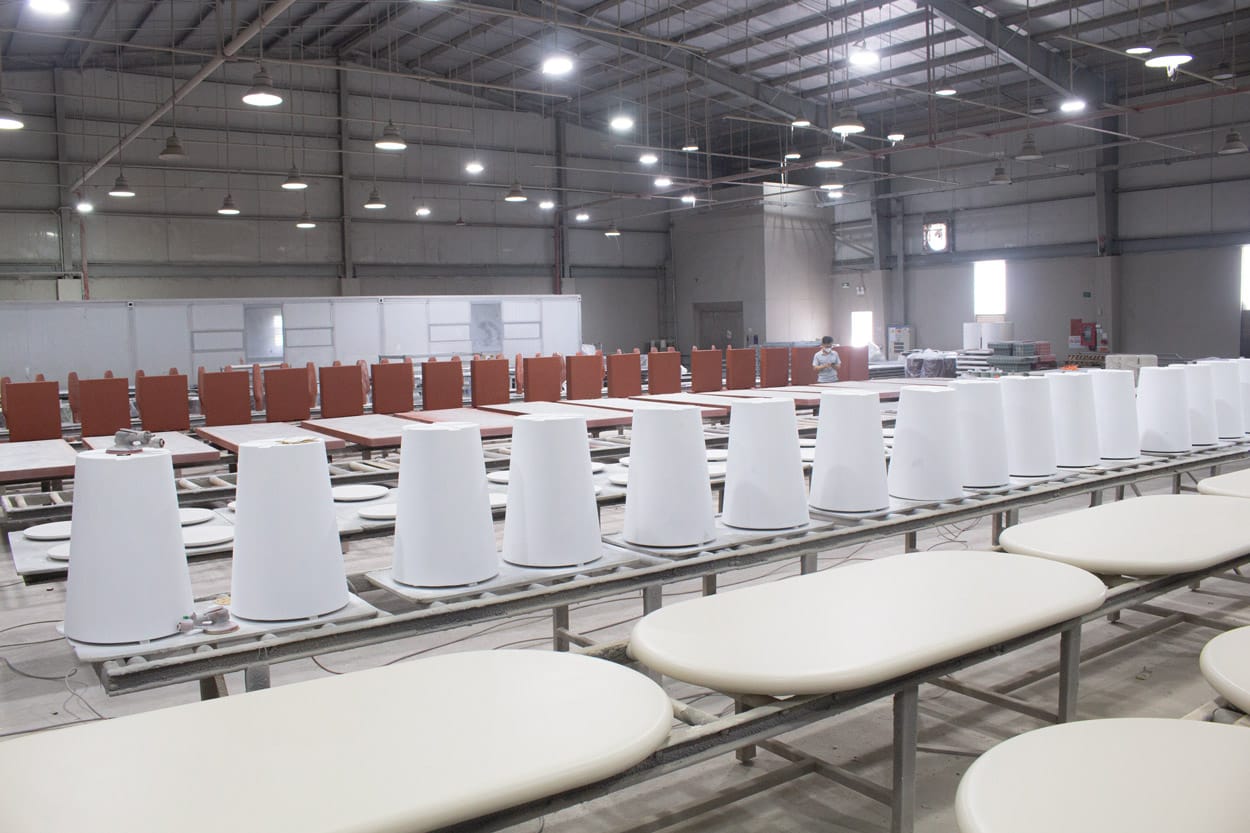
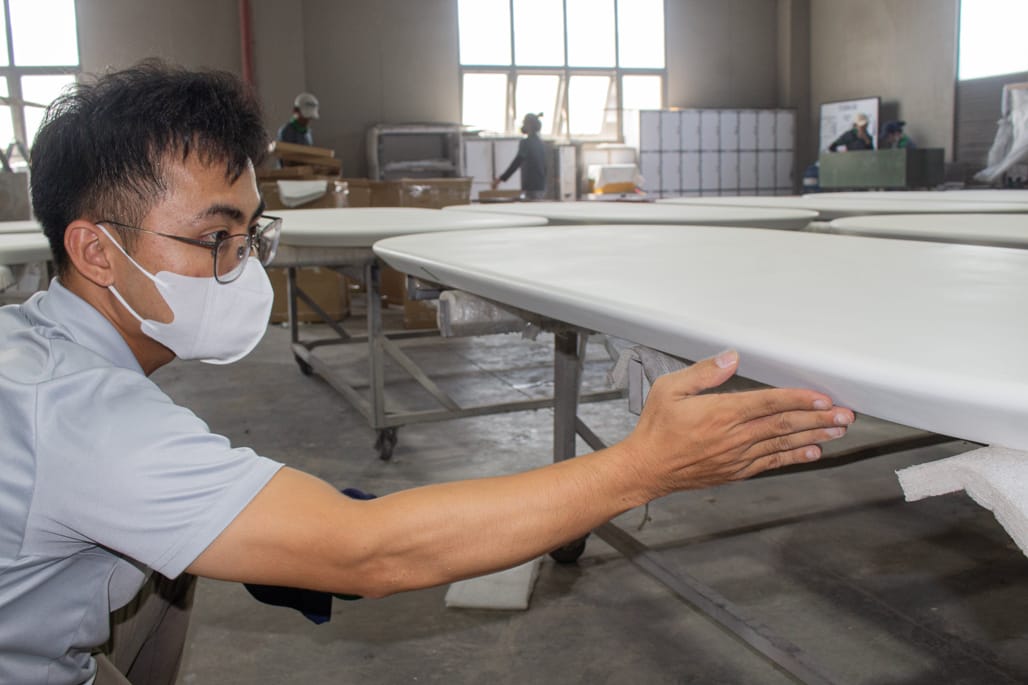
However, selecting the right wood material is only part of successful outdoor furniture manufacturing. Different wood species require different machining techniques, finishing systems, moisture control processes, and production expertise to maintain consistent quality at scale.
To see how professional manufacturers handle various outdoor furniture materials in real production environments, explore our guide inside a furniture factory Vietnam.
Each type of wood for outdoor furniture comes with its own strengths and limitations. To ensure the most effective choice for your specific project, Aurora Craft is here to provide practical, experience-based guidance tailored to your market, budget, and long-term goals.
Regardless of which wood for outdoor furniture you select, maintenance remains the key factor in preserving both lifespan and aesthetic value. So, how to protect wood furniture outdoors (how to protect wood furniture outdoors) effectively? Aurora Craft suggests:
- At the production stage: apply protective oils or specialized coatings to enhance waterproofing and UV resistance.
- During usage: clean regularly, cover furniture during extreme weather, and reapply protective finishes on schedule.
What Types of Wood Does Aurora Craft Use for Outdoor Furniture?
At Aurora Craft, we provide flexible OEM and ODM services, making it easier for businesses to choose the right wood for outdoor furniture that fits their budget, functionality, and product direction.
From teak, acacia, eucalyptus, and cedar to various types of engineered plywood, every material is carefully selected by Aurora Craft to ensure the highest quality and aesthetics. Whether it’s natural hardwood or engineered wood, we can flexibly manufacture with any type of timber our clients require.
Behind every successful outdoor furniture collection is a manufacturing process that combines material expertise, precision machining, quality control, and scalable production systems. To better understand how large-scale production and material handling work in practice, take a closer look inside our furniture factory Vietnam.
In particular, for natural wood collections, Aurora Craft exclusively sources FSC 100% and FSC Mix certified materials, guaranteeing sustainability and reliability in every product we deliver.
With over 15 years of experience, Aurora Craft has become a trusted partner for global businesses. Our products are widely present in major export markets such as the United States, Australia, Canada, Japan, South Korea, and the Middle East. From dining sets and coffee tables to outdoor stools, each piece meets international standards of durability and design.
If your business is looking for a reliable indoor–outdoor furniture manufacturer in Vietnam, Aurora Craft is the partner you can count on. Get in touch today for tailored production solutions that fit your needs.


-
 How Lead Time Impacts Furniture Manufacturing Cost
 -
 MOQ in Furniture Manufacturing: Cost Drivers Buyers Often Miss
 -
5 Best Factory Tips to Lower Custom Furniture Costs
-
Definition of MDF Wood: Properties, Types, and Applications Explained
-
How Hotel Furniture Wholesale Can Save Costs for Large Projects
-
Guide to Furniture for Retailers: Select the Right Materials for Your Business