
Guide to Furniture for Retailers: Select the Right Materials for Your Business
Which materials make the best choice for producing furniture for retailers’ and wholesalers’ indoor and outdoor collections? Drawing on our industry experience, Aurora Craft provides an overview of the most commonly used furniture materials for furniture for retailers, highlighting the key advantages and disadvantages of each option. Our goal is to help businesses make informed material decisions that maximize profit potential while minimizing production and investment costs. Let’s explore the best solutions available today.
Current Trends in Interior and Outdoor Furniture Usage
The global interior and outdoor furniture market is undergoing a significant transformation. Today’s consumers are not just looking for visually appealing products: they also care deeply about durability, sustainability, and maintenance costs. In major markets like Europe, North America, and Australia, this trend is clear: customers are willing to pay a premium for furniture that lasts long, withstands harsh weather, and is easy to clean and maintain.
Moreover, the “green consumption” movementis increasingly becoming a mainstream expectation. Consumers increasingly pay attention to a product’s journey, from the materials used, to manufacturing processes, to its environmental impact. As a result, furniture brands are investing more in lines that are both eco-friendly and economically sound over the long term. This approach is also a strategic path for furniture for retailers aiming to stand out in today’s competitive market.

From a business perspective, pressures such as logistics, warranty management, and inventory turnover force retailers to carefully consider material selection.
For businesses sourcing wholesale furniture in Southeast Asia, understanding supplier capabilities and regional sourcing conditions is just as important as choosing the right materials.
Products that are durable, low-maintenance, and resistant to damage mean fewer complaints, fewer returns, and more stable profits. Companies that optimize their product range with a “cost-effective yet long-lasting value” approach gain a clear competitive advantage.
In summary, the current trend in interior and outdoor furniture can be summed up in three key factors: sustainability, low maintenance, and long-term profitability. To identify which materials best meet all three criteria, Aurora Craft will guide readers through a detailed outdoor furniture materials comparison, helping businesses and furniture for retailers find the most effective solutions for a sustainable growth strategy.
Popular Materials for Manufacturing Indoor & Outdoor Furniture Today
Is your company unsure which indoor and outdoor furniture material offers the best balance of durability, cost efficiency, and profitability? Let Aurora Craft guide you in this section for clear answers.
GFRC (Glass Fiber Reinforced Concrete)
FRC (Glass Fiber Reinforced Concrete) is an advanced composite material primarily made from cement and glass fiber reinforcement. It has become a popular material in the production of indoor and outdoor furniture due to its outstanding advantages:
- Exceptional Durability: GFRC boasts compressive strength up to 4,000 psi, effectively resisting cracking and impact. The product retains its shape and color over time, making it a leading weather-resistant outdoor furniture option.
- Ultra-Lightweight: GFRC is approximately 25% lighter than traditional concrete, making transportation and installation easier and significantly reducing logistics costs.
- Fire Resistance: GFRC is non-flammable, ensuring absolute safety in both indoor and outdoor environments.
- Low Maintenance: With its water-repellent and mildew-resistant surface, GFRC requires minimal maintenance, making it a truly low-maintenance outdoor furniture material.
- Flexible Design: Easily molded into various shapes, from imitation stone or wood to intricate artistic designs, GFRC adapts to any architectural style.
- Faster Production: Using advanced spray-up or premix GFRC manufacturing techniques allows for rapid mold preparation, reduces finishing steps, and optimizes overall production time.

Of course, GFRC has a higher initial cost compared to conventional materials. According to MDPI (2024), GFRC production costs range from $96–107/m³, compared to around $81/m³ for standard concrete: about 10–30% higher. However, its 75% lighter weight significantly lowers transportation and installation expenses. Additionally, GFRC lasts 3-4 times longer than traditional concrete, so the real investment cost is not drastically different.
A recent study published on SpringerLink (2025) emphasizes that GFRC’s high durability, weather resistance, and minimal maintenance requirements contribute to improved long-term economic efficiency. While initial production costs may be higher, the material’s extended service life and reduced need for repairs or replacements make GFRC a cost-effective solution over its lifespan, particularly in outdoor and architectural applications.
For global furniture for retailers and wholesale suppliers, GFRC represents a smart long-term investment. Despite an initial cost increase of 10–15%, the return on investment (ROI) is remarkable: products are durable, color-stable, and maintain display value consistently over the years.
Wooden
Wood has always been a classic material in interior and exterior design, providing a warm, sophisticated, and naturally comfortable feel that few other materials can match. Its greatest strength lies in its aesthetic and emotional value: each wood grain has its own unique characteristics, creating a one-of-a-kind beauty for each product.
In the hands of skilled craftsmen, wood can be transformed into many different styles. This diversity helps outdoor wooden furniture stand out in the sustainable furniture collections that many brands aim for.
Among the materials, natural woods such as teak, acacia, and eucalyptus are the most popular. Teak, in particular, is renowned for its moisture resistance and is an ideal choice for garden furniture. Additionally, engineered wood or pressure-treated wood is often used to optimize costs while still ensuring durability for mass-produced products. Regardless of the type, using legally FSC-certified wood remains a mandatory standard for enhancing competitiveness in the export market.

However, wood also has drawbacks. Prolonged exposure to sunlight and rain can lead to fading, warping, or cracking if not properly treated. Therefore, regular maintenance is essential to preserve both the durability and natural beauty of the furniture. This means higher initial investment and recurring maintenance costs compared to composite materials. Furthermore, the payback period for outdoor wooden furniture is typically longer due to higher upfront costs and ongoing maintenance requirements, rather than rapid wear or depreciation.
Despite these challenges, outdoor wooden furniture still offers impressive commercial value thanks to its emotional appeal and long-lasting durability. Particularly in the high-end segment, furniture for retailers serving hotel chains, resorts, or the European market often views wood as a long-term investment: timeless, reliable, and continues to remain highly relevant in long-term, design-driven collections.
In the high-end segment, furniture for retailers serving hotels, resorts, or European markets often view wood as a long-term investment.
Metal
Metal is a highly favored material in the furniture industry thanks to its exceptional durability and sleek, modern elegance. Common options include aluminum, iron, and stainless steel. Each type has its own characteristics, yet all convey a sense of strength and refinement to any space.
One of the main advantages of metal is its long-lasting durability and excellent weather resistance when properly plated and painted. Additionally, metal is well-suited for mass production, as casting and coating processes can be automated, ensuring consistent quality across batches. This makes it an ideal choice for businesses targeting industrial-style products, large-scale projects, or international retail chains.

However, metal does have certain limitations. Its heavier weight results in higher shipping costs compared to lighter materials such as wood or plastic-based furniture, and it tends to absorb heat, making it less suitable for outdoor areas lacking shade. Furthermore, the initial investment can be significant, so businesses should carefully consider budgets and select a reputable supplier before committing.
In the long run, though, metal furniture offers fast turnover and stable profit margins. For brands seeking a reliable source of high-quality, durable, and low-maintenance furniture for retailers, metal remains a strategic material choice that balances quality, longevity, and lifecycle cost efficiency.
Plastic
Plastic is among the most popular materials in the outdoor furniture industry today, thanks to its lightweight nature, ease of shaping, and low production costs. Common plastics used for furniture include PP, PE, HDPE and other plastic-based composite materials, offering versatility for a wide range of outdoor and functional furniture designs.
In recent years, global consumer trends have gradually shifted toward sustainable plastic – recycled, reusable, or biodegradable plastics – to minimize environmental impact. This opens a new path for businesses aiming to produce sustainable outdoor furniture that not only meets aesthetic demands but also aligns with global eco-friendly trends.
In terms of advantages, plastic outdoor furniture offers low initial investment and high scalability for mass production. Its light weight optimizes logistics, reduces transportation costs, and shortens inventory turnover. Profit margins can be significant if manufacturers invest in large-scale molds or automated injection systems.
For these reasons, plastic furniture is especially well-suited for supplying furniture for retailers, particularly in markets that require fast turnover, such as supermarkets, convenience stores, or seasonal retail chains. It is also widely used for furniture in public facilities such as hospitals, kindergartens, and similar environments.
However, plastic has its limitations. It is generally less durable than wood or GFRC, prone to fading, becomes brittle under prolonged UV exposure, and can appear “cheap” if the surface finish is not refined. Additionally, plastic furniture brands often struggle to position themselves in the premium segment, as the material’s lifespan and tactile quality do not convey the same sense of luxury as metal or wood.
Plastic furniture is especially well-suited for furniture for retailers operating in fast-turnover retail markets.
Rattan and Bamboo
Rattan and bamboo are celebrated as symbols of natural, cozy design and are experiencing a strong revival in the global “eco living” trend. They are among the popular eco-friendly furniture materials today, admired for their rustic charm, lightness, and unique handcrafted quality.
In terms of advantages, natural rattan and bamboo are lightweight, easy to shape, and offer an organic aesthetic that brings warmth to any space. However, these materials are quite sensitive to weather conditions: they can mold, fade, or deteriorate quickly if not properly treated. That’s why natural rattan and bamboo are typically more suitable for indoor furniture.
For outdoor spaces, manufacturers often use synthetic rattan (PE/HDPE wicker) as an alternative. This material is more durable, water-resistant, and able to withstand sun and rain consistently. Even so, synthetic rattan furniture still has its limitations: if the weaving technique or fiber quality isn’t up to standard, the pieces can age quickly and lack the refined, premium look of natural rattan.
The most suitable market segment is the mid-range, particularly retail outlets targeting green lifestyles and consumers who value natural aesthetics over long-term outdoor durability.
Outdoor Furniture Materials Comparison
Next, let’s explore a detailed outdoor furniture materials comparison with Aurora Craft to better understand the characteristics, durability, and application potential of each material used in indoor and outdoor furniture production.
| Material | Weather Durability | Maintenance Level | Investment Cost | Eco-Friendliness | Suitable For |
| GFRC | ★★★★★ | Very Low | Medium | Medium | Furniture for retailers needing durable, low-maintenance products |
| Wood | ★★★★☆ | High | High | High (FSC) | Premium, hospitality |
| Steel/Aluminum | ★★★★☆ | Low | Medium | Medium | Chain stores, projects |
| Plastic | ★★★☆☆ | Very Low | Low | Low | Fast-turnover retail markets |
| Rattan/Bamboo | ★★★☆☆ | High | Medium | Very High | Eco-focused retail, resort shops |
Conclusion: Each material has its unique strengths depending on business goals and product positioning. GFRC and steel/aluminum are ideal choices for furniture for retailers seeking weather resistant patio furniture that is durable and low maintenance outdoor furniture. Meanwhile, wood and rattan/bamboo align perfectly with the growing demand for eco-friendly furniture materials, catering to sustainable living trends and environmentally conscious consumers.
Advice on Choosing Furniture Production Materials from Aurora Craft
With over 15 years of experience in manufacturing and supplying furniture to international companies and businesses, Aurora Craft has accumulated valuable practical insights that help partners select materials effectively, optimize profits, and reduce risks. For businesses in retail or wholesale furniture, especially furniture for retailers, we recommend considering the following factors when choosing products for your store:
- Don’t focus solely on upfront costs: Some materials, such as GFRC or premium wood, have higher initial investment costs, but in the long run, they reduce damage, minimize returns, and lower maintenance expenses — resulting in higher actual profits. On the other hand, plastics or metals may be cheaper initially, but you need to carefully consider inventory turnover and target market to avoid long-term stockpiling.
- Match materials to your market and customer segment: For furniture for retailers operating fast-moving retail models, plastics and metals allow quicker inventory turnover. For hotels, resorts, or premium markets, wood, GFRC, or rattan can create emotional value and a distinctive appeal.
- Consider logistics and warranty: Lightweight materials like GFRC, plastics, and rattan help reduce shipping and installation costs. Heavier materials such as metals or wood require careful planning of transportation, storage, and potential damage during handling.
- Diversify your product portfolio: Avoid “putting all your eggs in one basket.” Combining different materials allows you to offer both high-value products and fast-turnover items, balancing profits and business risks effectively.
- Leverage the green and sustainable trend: Environmentally friendly materials are increasingly sought after by high-end clients and European/Japanese markets. Investing in this category not only enhances brand value but also aligns with long-term global sustainability trends.
Where to Find Reliable Wholesale Furniture Suppliers?
Aurora Craft is proud to be one of the leading wholesale furniture suppliers in Vietnam and a trusted partner for businesses and furniture for retailers seeking long-term collaboration.
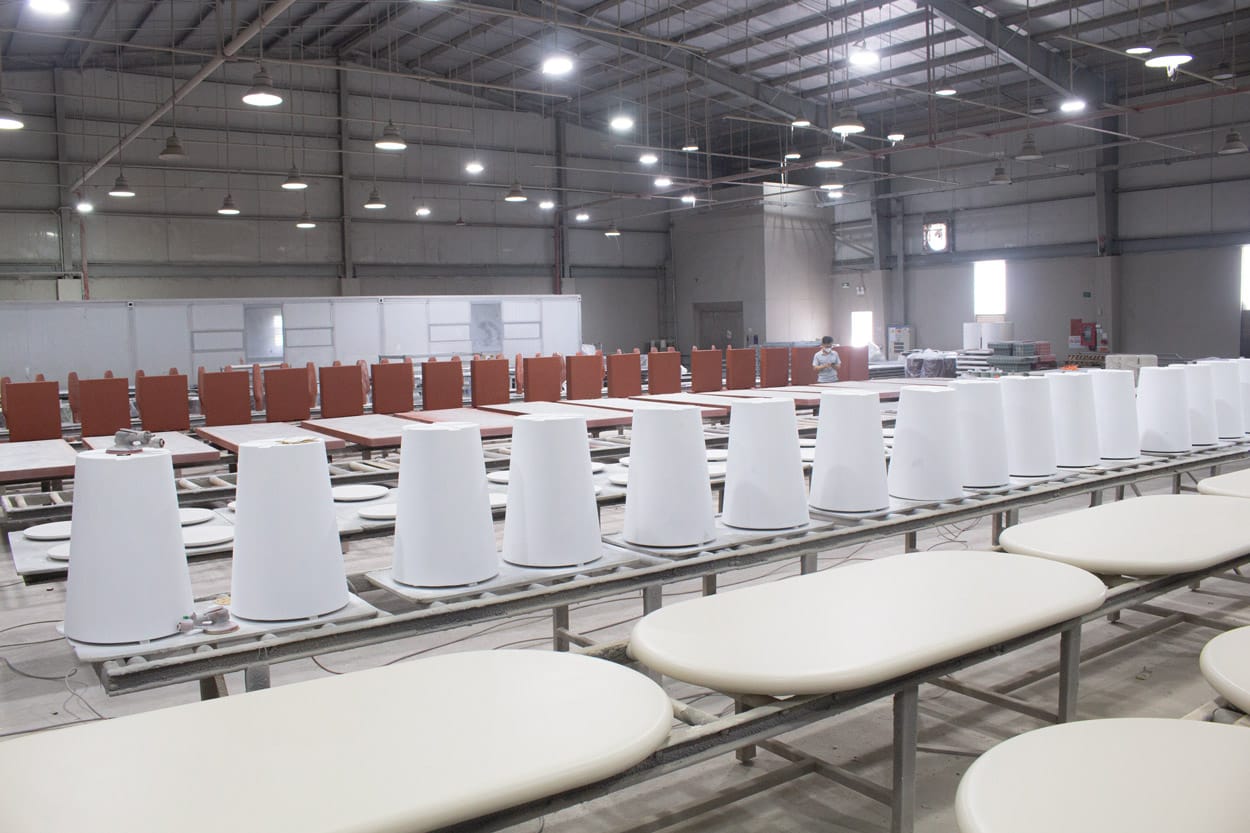
We stand out with our multi-material manufacturing capabilities, including GFRC, composite, fiber cement, and FSC-certified wood. In addition, Aurora Craft’s dedicated team skillfully combines various materials to create products that are both durable and aesthetically pleasing, meeting high export standards.
With our experienced and committed team, Aurora Craft is always ready to support furniture for retailers worldwide. Contact us today to receive our product catalogue and expert advice on the optimal material solutions for your business strategy.
Aurora Craft is proud to be one of the leading wholesale furniture suppliers in Vietnam, supporting furniture for retailers worldwide with durable, market-ready solutions.


-
 How Lead Time Impacts Furniture Manufacturing Cost
 -
 MOQ in Furniture Manufacturing: Cost Drivers Buyers Often Miss
 -
5 Best Factory Tips to Lower Custom Furniture Costs
-
Definition of MDF Wood: Properties, Types, and Applications Explained
-
How Hotel Furniture Wholesale Can Save Costs for Large Projects
-
Guide to Furniture for Retailers: Select the Right Materials for Your Business